The Washington Post: Then and Now — A Pattern of Injustice
“Who wants to vote the (xxx)-emancipation ticket? Who wants Iowa covered with indolent blacks? Answer at the polls.” Stilson Hutchins[2

Photo credit: thearticle.com
A Black History Month Reckoning
 By Gloria Zuurveen | The Southern Truth
The Washington Post has just laid off one-third of its breaking news newsroom.
On the surface, this reads like another corporate downsizing in the age of AI and austerity. But for Black people — and for the Black press — this is not just a business story. It is a continuation of a long, painful historical pattern that stretches back to the very birth of the nation and the very founding of this newspaper.
During this Black History Month, we must tell the whole truth: the Washington Post is not a neutral bystander in Black history. It is part of it — shaped by it, complicit in it, and in many ways built upon the same racial order that sought to subjugate Black America.
For the Black press, that single headline about layoffs tells you everything you need to know about how power has always valued us — or rather, how it has consistently devalued us.
This is why the contrast between the Post and a legacy adjudicated resource like PACE NEWS matters so deeply. PACE NEWS is a boots-on-the-ground, solid Black Press — born out of necessity, not privilege — built to survive hostility, not to crumble when a billionaire tightens the purse strings. The irony is bitter. A newspaper that now speaks the language of diversity and equity was, in its early history, a journalistic actor in the machinery of Jim Crow — a system designed to preserve the racial hierarchy that slavery created. Founded in 1877, the same year federal troops were withdrawn from the South and Reconstruction effectively died, the Washington Post emerged in a nation already retreating into white supremacy. Its founder, Stilson Hutchins, came from a tradition of journalism that opposed Black enfranchisement and reflected the racist attitudes of his era. The paper was born not in a moment of Black liberation, but in a moment of Black betrayal by the federal government and by American institutions.
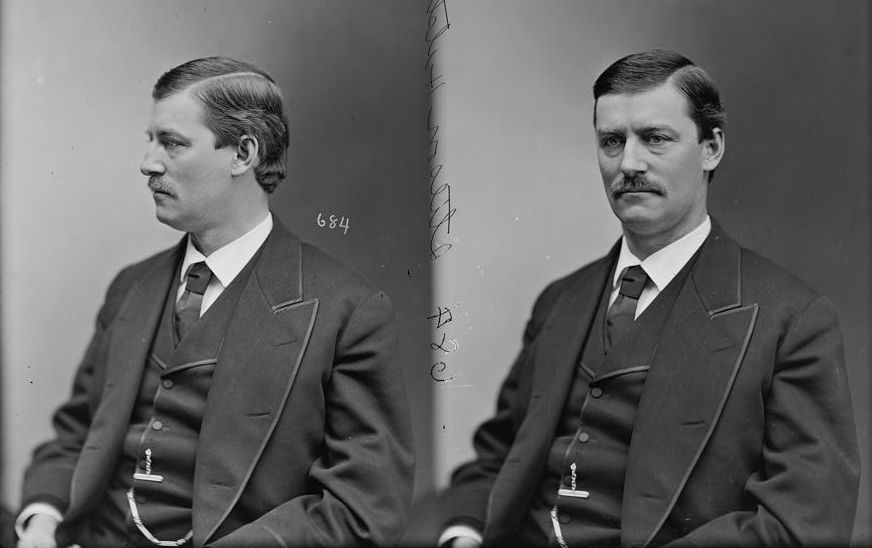
Library of Congress Washington Post founder, Stilson Hutchins
From its very birth, the Post operated inside a racial order that denied Black people full citizenship, dignity, and voice. It grew in a capital city that segregated Black residents, restricted Black opportunity, and normalized Black exclusion — and its journalism reflected that reality rather than challenging it.
This was not accidental. It was structural.
During the Red Summer of 1919, when white mobs terrorized Black communities across America — including in Washington, D.C. — the Post did not stand as a protector of Black life. Instead, like many mainstream papers, it ran sensationalized, inflammatory coverage of alleged Black crime. Its headlines and framing helped stoke fear, resentment, and ultimately violence against Black residents and Black businesses.
This was not neutral reporting. This was journalism that fed a climate where Black bodies were treated as expendable — where our pain was spectacle, and our deaths were justified through racist narratives. It was journalism that helped sustain Jim Crow by shaping public perception in favor of white power and against Black humanity.
Let us be clear: in those early decades, the Washington Post was part of a media ecosystem that normalized segregation, lynching, and Black dispossession. It was a paper that lived comfortably within Jim Crow, not against it — a paper that benefited from a racial hierarchy built on the lingering legacy of slavery.
And here is the painful truth that too many refuse to confront: while Black people were being lynched and left hanging from trees, photographed as trophies of white terror, mainstream newspapers — including the Post — either ignored our suffering or framed it in ways that dehumanized us. Our full liberty — even in words and images — was constrained, controlled, and censored. Those images of Black bodies hanging from trees were not just acts of violence — they were messages of control. And too often, mainstream journalism helped circulate that message rather than condemn it. That is part of the Washington Post’s Black History, whether it wants to reckon with it or not. Meanwhile, the Black press rose precisely because of this betrayal.

Rubin Stacy, lynched victim, hanging from a tree, (1930 – 1951) (Digital Collections, The New York Public Library)
Through slavery’s aftermath, through Jim Crow, through redlining, through police terror, through economic abandonment — Black newspapers survived to tell our own stories when the so-called “paper of record” would not. We chronicled the truth about lynching, segregation, and injustice when mainstream outlets sanitized or suppressed it. We preserved Black dignity when others portrayed Black bodies as objects.
The Black press was not a luxury; it was a lifeline.
So when a powerful billionaire owner of the Washington Post now says, in effect, that he does not care about journalists’ pension plans, their careers, or their livelihoods — it is not new. It is the same callousness, wearing a modern suit. It is the same disregard for human consequence that once allowed Black suffering to be ignored in the name of white comfort. This is a new day and a new way for corporate America — but for Black America, the pattern feels painfully familiar.
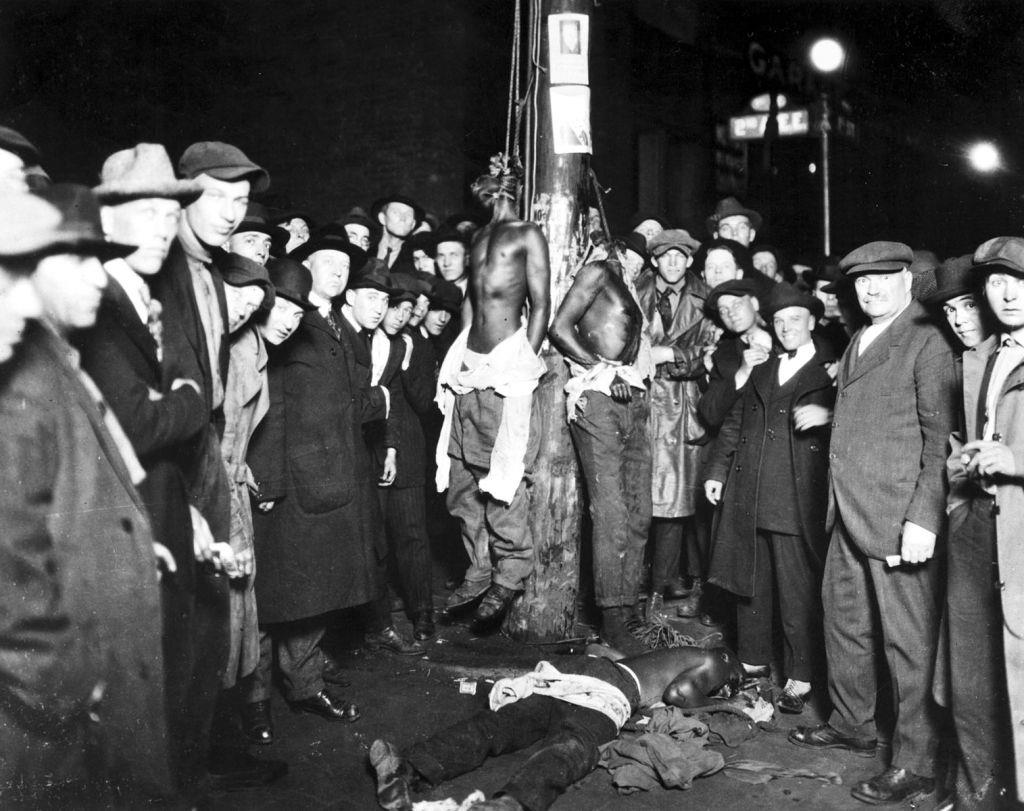
A postcard of a Duluth lynching, June 15, 1920. (Minnesota Historical Society)
The layoffs at the Post are not separate from its history. They are of a piece with it.
Just as the paper once helped create a journalistic environment that limited Black freedom, Black voice, and Black humanity, it now participates in an economic model that discards workers. Different century, same hierarchy.
The newsroom that once basked in the legacy of Katherine Graham and Watergate now faces a reckoning in 2026 — after AI, after consolidation, after billionaire ownership — and it does not appear to have any intention of stopping the cuts.
Corporations are gutting and cutting wherever it is most “feasible” to run a mean, lean operation. And they do it with little concern for who gets hurt, who loses a career, or whose community loses a voice.
For Black Americans, this is not just about layoffs. It is about a continuum of injustice — from a newspaper that historically worked, journalistically, within a system that denied us liberty, to a newspaper that now discards workers in the name of profit and efficiency.
This is why Black History Month is not just a celebration — it is a reckoning.
We must remember that institutions like the Washington Post were not built as allies of Black freedom. They were built inside a racial order that sought to contain it. Their archives, their headlines, and their silences are part of the historical record of how America treated Black people.
This is our Black History. And the Washington Post is part of that history — not as a hero, but as a cautionary tale of how power uses media, then and now.
So as we honor Black History Month, we must remember not only our suffering, but our resilience. The Post’s newsroom may shrink, but the Black press — forged in fire, tempered by struggle — still stands.
We were here before them.
We will be here after them.
That is the Southern Truth.