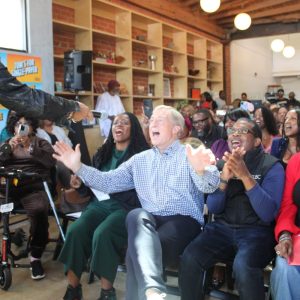
Inglewood Fights Back in $400 Million Showdown With Stan Kroenke
City Says California Law Prevents Payment as Legal Battle Over Hollywood Park Agreement Intensifies
 By Dr. Gloria Zuurveen, Editor-in-Chief
PACE NEWS/ Inside Inglewood
INGLEWOOD — As the world prepares to descend upon Inglewood for the FIFA World Cup, the 2027 Super Bowl, and the 2028 Olympic Games, a major legal battle is unfolding behind the scenes that could have significant financial consequences for the City of Inglewood and its residents. At the center of the dispute is a demand by Los Angeles Rams owner Stan Kroenke and Hollywood Park for approximately $400 million in reimbursement tied to infrastructure improvements associated with the development of SoFi Stadium and the surrounding Hollywood Park project. Kroenke’s legal team argues that the reimbursement provisions were included in a 2015 Development Agreement approved through a voter initiative and that the city is obligated to honor those commitments.

Inglewood Mayor James T. Butts, Jr.
The City of Inglewood, led by Mayor James T. Butts Jr., is refusing to pay. The city’s position is not based on whether Hollywood Park transformed Inglewood. Few observers dispute the enormous impact of the development. Since construction began, Inglewood has attracted billions of dollars in investment, welcomed new entertainment venues, benefited from major infrastructure projects, and positioned itself as one of the most visible cities in America. Court filings cited by Hollywood Park point to a dramatic decline in unemployment and substantial increases in property values since the project was approved. Instead, the city argues that subsequent California court rulings changed the legal landscape and rendered portions of the original voter-approved agreement unenforceable. According to court documents, Inglewood contends that agreements adopted through voter initiative cannot be enforced in the manner Kroenke now seeks and that the city would be acting contrary to California law if it approved the reimbursement demand.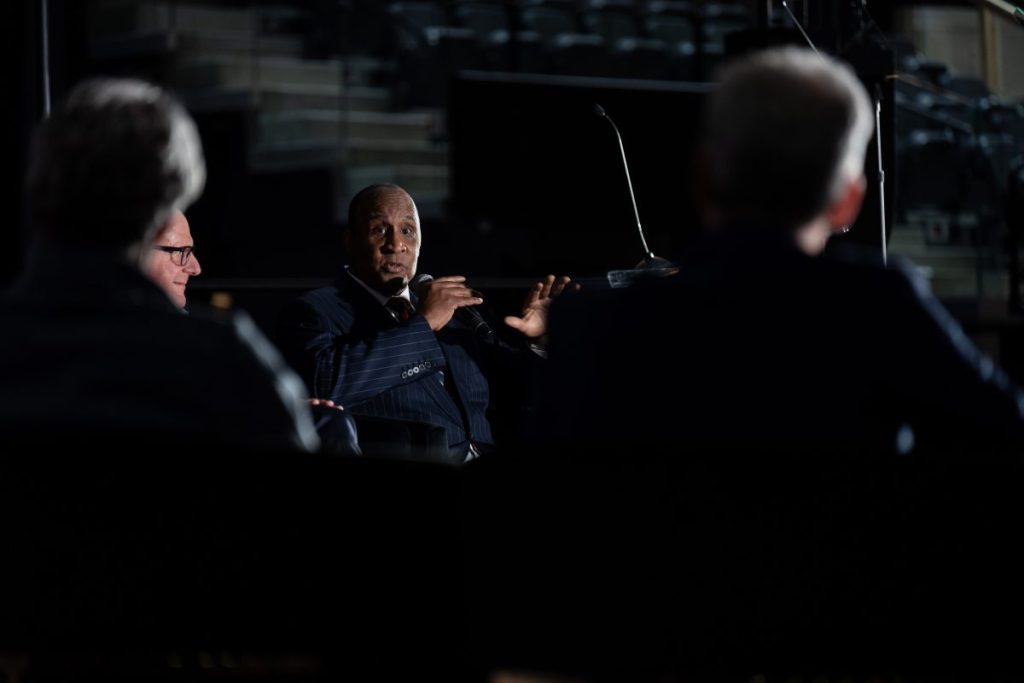
For residents trying to understand the dispute, the issue is not whether SoFi Stadium was built. The stadium exists. The roads exist. The infrastructure improvements exist. The question before the courts is who is legally responsible for paying for them. Kroenke’s legal team argues that Hollywood Park spent hundreds of millions of dollars constructing public improvements, roads, utilities, and other infrastructure with the understanding that reimbursement mechanisms established in the 2015 agreement would remain in place. Hollywood Park officials have warned that if agreements negotiated with cities can later be invalidated, it could undermine confidence in doing business not only in Inglewood but throughout California.
Mayor James T. Butts speaking on Thursday at the Hollywood Park Opening Celebration in Inglewood. Photo by Gloria Zuurveen

IOC Member Hong Zhang, IOC Vice President Nicole Hoevertsz, Rex Richardson, Mayor of Long Beach, LA28 President Casey Wasserman, James T. Butts, Mayor of Inglewood, IOC President Thomas Bach, Marqueece Harris-Dawson, the President of the Los Angeles City Council (IOC/Greg Martin)
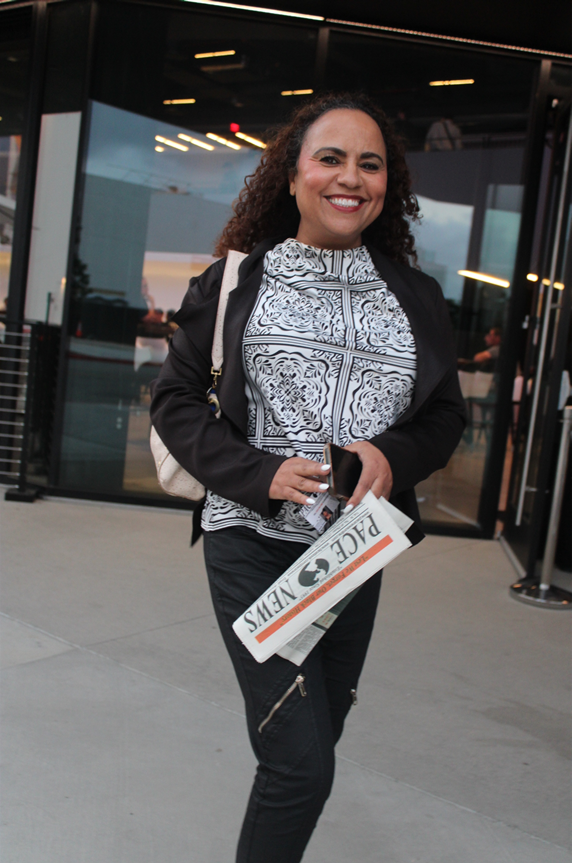
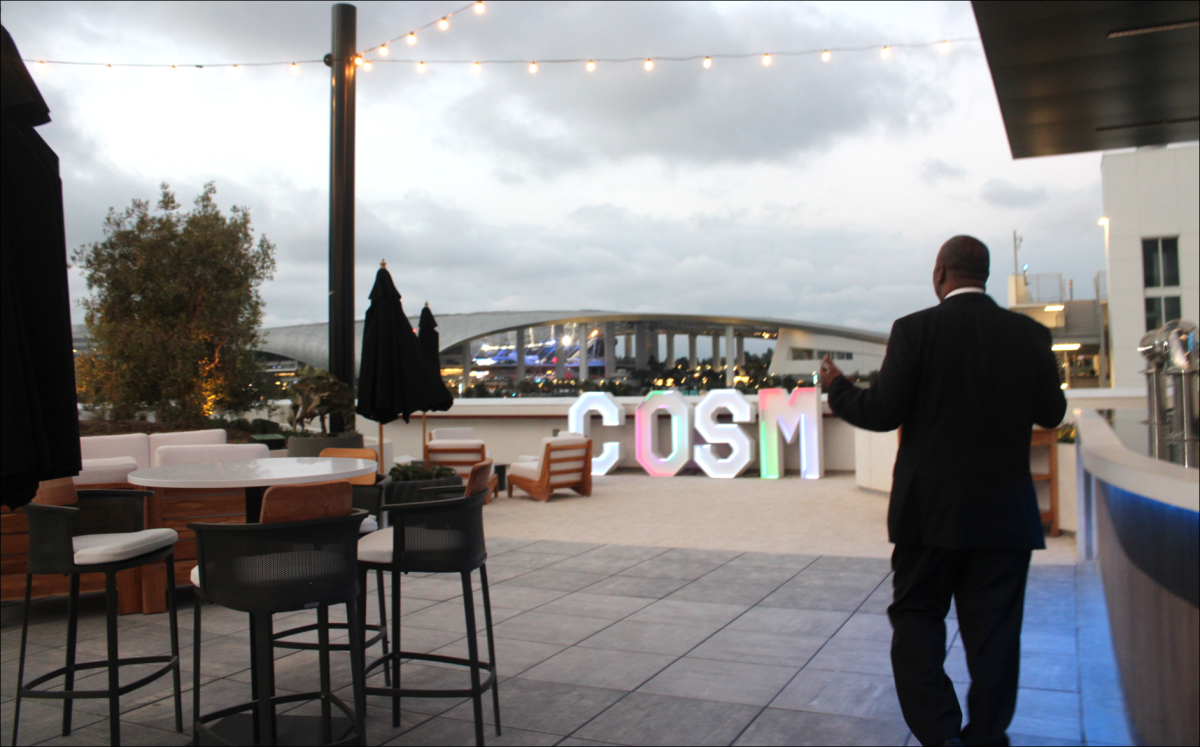
Yame Gizaw is an Inglewood real estate agent standing outside COSM during the Hollywood Park Opening Celebration in Inglewood. Photo by Gloria Zuurveen
The city sees the matter differently.
Inglewood’s attorneys have argued that California law has evolved since 2015 and that local governments cannot simply ignore subsequent court decisions. Their position is that public officials have a legal duty to follow current law rather than continue operating under provisions that may no longer be valid. Court filings have emphasized that even wealthy developers are subject to the same legal standards as everyone else. For Mayor Butts, the fight has become a high-stakes defense of public finances.
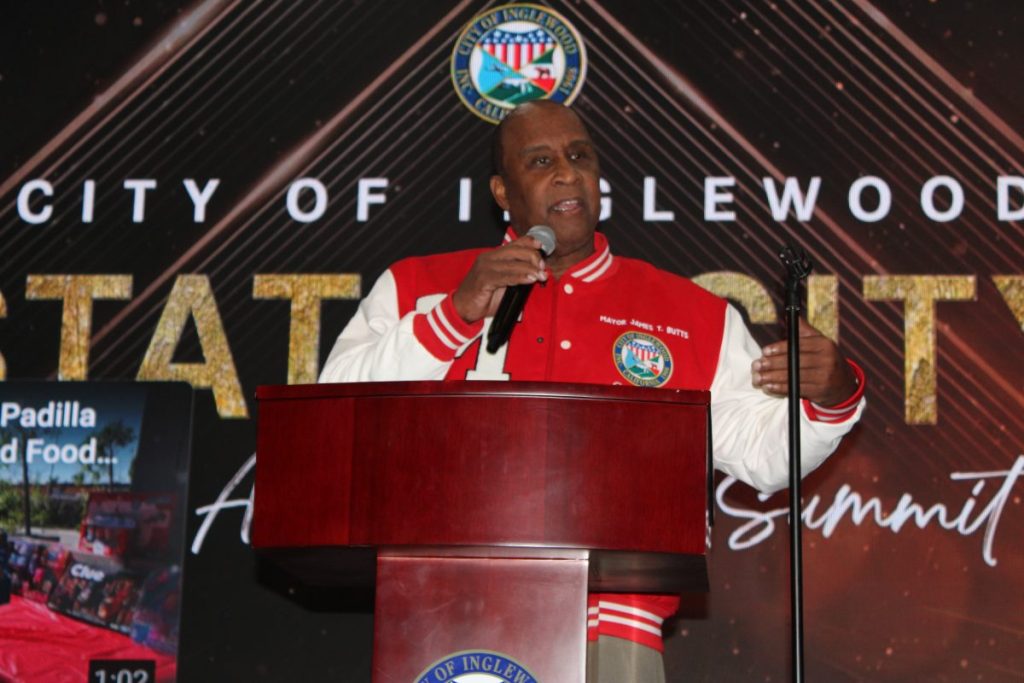
Mayor James T. Butts speaking to crowd at the City of Inglewood Swearing-In Ceremony on December 14, 2024. Photo Gloria Zuurveen
Critics have questioned why the city continues to battle one of the wealthiest sports owners in the world. Supporters counter that surrendering without a legal fight could expose taxpayers to a potential obligation approaching $400 million. The legal dispute also follows earlier clashes between Hollywood Park and the city regarding digital billboard revenue and control over public land surrounding the stadium complex. Those disagreements revealed a growing tension between a powerful private development and a municipality determined to maintain authority over its public assets and future revenue streams.
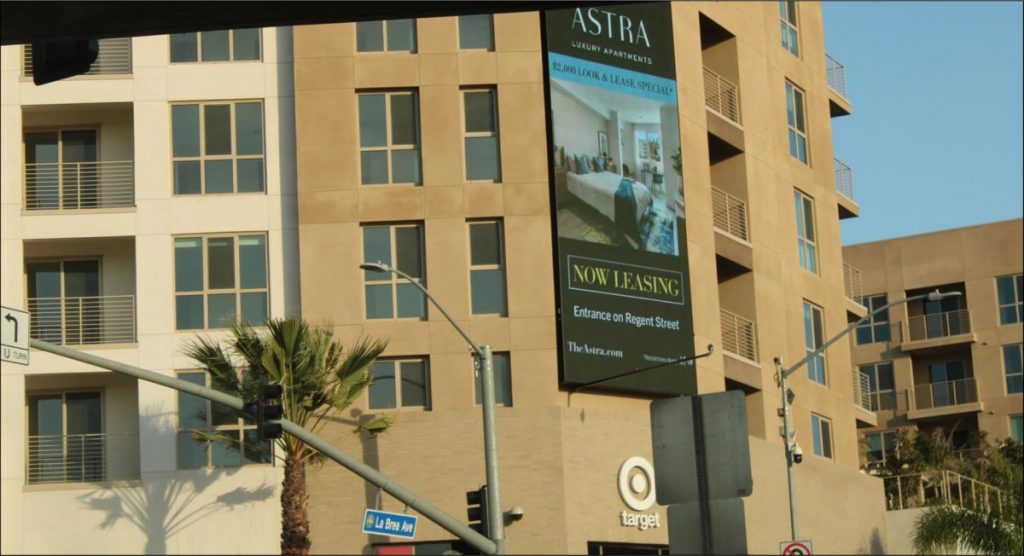
One example of Inglewood’s development and revenue stream is the Target store with luxury residential apartments on the corner of La Brea and Florence Avenues in the City of Inglewood and adjacent to the People Mover that goes directly to LAX from downtown Inglewood. Photo by Gloria Zuurveen
What makes this case particularly significant is that it may ultimately determine whether development agreements approved years ago remain enforceable after subsequent court decisions reshape the law. In simple terms, Kroenke argues that a deal is a deal. The city argues that government cannot enforce a deal that conflicts with current law. The courts will decide which interpretation prevails. Until then, residents should understand that this case is about much more than football, stadiums, or personalities.
It is about the relationship between public money and private investment. It is about whether taxpayers could be responsible for hundreds of millions of dollars. It is about the limits of voter initiatives, development agreements, and municipal authority under California law. Most importantly, it is about who controls the future of Inglewood—the public through its elected government, private developers through contractual agreements, or ultimately the courts through their interpretation of the law.
For now, the legal battle continues, and neither side appears willing to back down.