State-Run or County-Run? Either Way, the Same Broken Oversight: How the BSCC Keeps Failed Systems Alive
By Gloria Zuurveen, Publisher, The Southern Truth
Some people hope that moving youth out of state-run juvenile prisons into county-run facilities might fix long-standing problems: violence inside the halls, poor education, and abuse that has scarred generations of young people — especially Black youth and young adults.
But here’s the real question:
Who’s actually in charge of setting the rules, inspecting these places, and deciding who gets funded to create real alternatives?
That’s the Board of State and Community Corrections (BSCC).

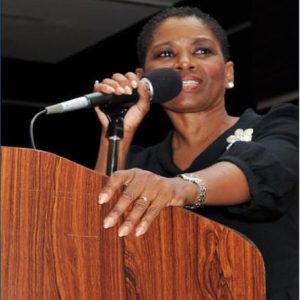
Linda Penner, Chair of the Board of State and Community Corrections Composition: The Chair of the Board is a full-time paid position, appointed by the Governor and subject to Senate confirmation.
The BSCC’s history dates to 1944 when the Board of Corrections (BOC) was established as part of Gov. Earl Warren’s system-wide reorganization that improved prison conditions and centralized management. In 2004 the Corrections Standards Authority replaced the BOC within the California Department of Corrections and Rehabilitation following an independent panel’s finding that the prison system suffered from out-of-control costs and the highest recidivism rate in the nation.
The independent BSCC is vested with the CSA’s rights, powers, authorities and duties to set standards for the training of county corrections and probation officers. The BSCC also has a mission to improve public safety through cost-effective, promising and evidence-based strategies and programs that manage and rehabilitate adults and youth.
The BSCC trains the very people who run these juvenile halls.
The BSCC creates the policies and standards these facilities must follow.
The BSCC is responsible for inspecting them to see if they’re safe, humane, and effective.
And the BSCC controls hundreds of millions in grant funding that could go to proven community-led programs — but often doesn’t.
Yet despite all this power, we still see the same outcomes:
-
Ongoing violence inside juvenile halls
-
Black and brown youth and young adults filling cells
-
Low-quality education and little meaningful rehabilitation
-
And a funding process with no appeal, little transparency, and little accountability to the communities most harmed
What’s wrong with this picture?
We have an agency that is supposed to protect youth, hold counties accountable, and promote rehabilitation — but instead keeps pouring money into the same systems, overseen by the same leadership they trained, without giving those most affected a real voice.
So even if the state hands the keys to the counties, the BSCC still:
- Writes the rules
- Trains the staff
- Funds the programs
- Inspects the facilities
And when something goes wrong, there’s no meaningful accountability or path to challenge it — especially not from the families and communities whose sons and daughters are behind those walls.
The real problem isn’t just who runs the facilities — it’s who writes the rules and controls the money.
If we keep the same system, run by the same agency, with the same lack of accountability, nothing will change — and young people, especially Black youth and young adults, will keep paying the price.
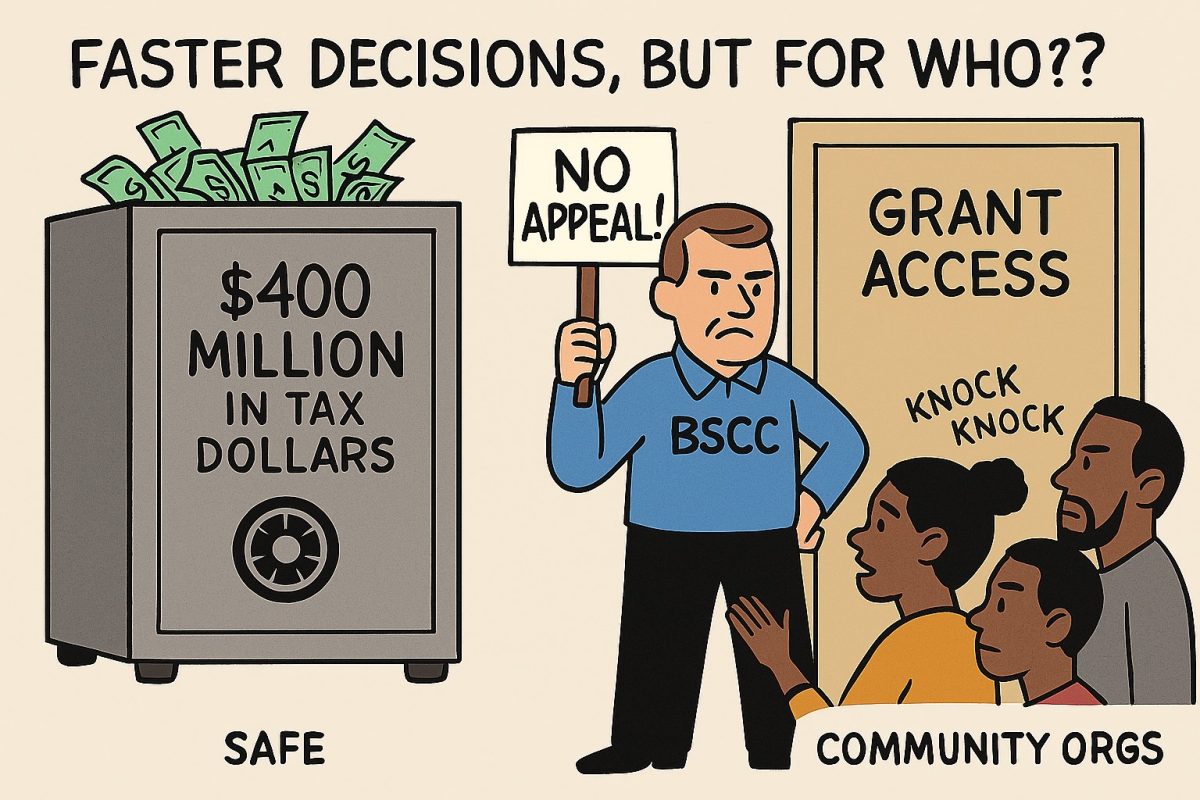
The Board of State and Community Corrections (BSCC) proudly boasts on its own website that it oversees and distributes over $400 million in public safety grants every year. That’s our tax dollars—money that’s supposed to help at-risk youth, young adults and adults prevent violence, stop recidivism, and support communities most harmed by crime and incarceration.
But here’s the problem: there’s no appeal process if your grant proposal is denied.
When BSCC staff member Colleen Curtin, Deputy Director, Corrections Planning and Grant Programs was asked about it, her answer was blunt: “No. We don’t have an appeal process.”
Why?

Colleen Curtin has worked in the community corrections field for 28 years
According to Curtin, the lack of an appeal process exists to “speed up the process” so funds can be distributed more quickly. But speeding things up shouldn’t come at the expense of fairness, transparency, or accountability—especially when it involves public dollars. And it gets worse. BSCC staff admitted that, due to an “overwhelming” number of applications, they resorted to using internal staff—who may not be subject-matter experts—to score and rate proposals. This directly contradicts what Curtin told us during our conversation, where she insisted that proposals are reviewed by an “outside expertise panel.”
So which is it? Are proposals truly being evaluated by qualified outside experts, or by in-house staff who may lack the understanding of community violence, youth rehabilitation, or the lived realities of Black communities?
And if your organization is denied funding—no matter how unfair or flawed the process may be—you can’t object, you can’t question the scoring, and you can’t appeal.
All this, while millions of dollars meant to uplift and protect vulnerable youth and young adults are being funneled largely outside the very Black communities most deeply scarred by incarceration and violence. But board members like Scott Budnick seems to be in ethic violation when it comes to conflict of interest with an organization he founded: Check it out Scott Budnick is the CEO of One Community LLC, a for-profit media company focused on social impact, and also the founder of the Anti-Recidivism Coalition (ARC) — a prominent nonprofit that advocates for justice-involved youth and adults. One of the July meetings are being held at his facility, that is, his founding organization’s facility. 
Scott Budnick, Founder of Anti-Recidivism Coalition Composition: A community provider of rehabilitative treatment or services for adult offenders, appointed by the Speaker of the Assembly
This appears questionable, at the very least, because if official meetings, decision-making processes, or funding deliberations (such as those related to the BSCC, legislative input, or grant scoring) are being held within the offices or facilities of ARC—the organization founded by Budnick—it raises serious concerns about neutrality, transparency, and fairness.
Here’s why it matters:
- Power + Proximity = Influence
If decisions about public safety funding, criminal justice reform policies, or state grants are being made in spaces tied to ARC, it creates the perception that ARC—and by extension, Budnick—has privileged access to decision-makers, possibly tipping influence in their favor.Now, mind you, Curtin advised that Budnick’s organization did not apply for the grant—at least not this time around. But there have been other times when he was still sitting comfortably on the board during previous BSCC grant cycles. - Double benefit risk
As the founder of ARC and CEO of a separate LLC that benefits from social impact storytelling, he could be in a position to shape policy or funding in a way that benefits either or both — whether directly (via contracts or grants) or indirectly (by enhancing influence or brand credibility). - Conflict of interest policies exist for a reason
In public institutions like BSCC, California law and ethics guidelines prohibit “even the appearance” of a conflict, especially when taxpayer dollars are involved. Hosting meetings or making public decisions at a space tied to a stakeholder organization blurs that line.
What this doesn’t necessarily mean:
It doesn’t mean Scott Budnick or ARC has done anything illegal.
But it does mean that transparency, fairness, and location neutrality should be demanded — especially in a state where Black-led organizations are routinely denied access, funding, and influence.
Final thought:
When the table is set in one organization’s house, we must ask who’s being invited, and who’s being left out.
This is exactly why The Southern Truth demands clear boundaries, open doors, and equitable access—not just for the connected, but for the committed.
As we’ve reported before in The Southern Truth, just look at the faces of homelessness in South Los Angeles: young Black men — many of them justice-involved, carrying records that shadow them everywhere they go. And yet, in our own backyard, there are so few services truly reaching them.
Contrast that with places like Homeboy Industries, which over the years has received — and rightfully so — millions in grant funding and generous community donations to help those coming out of the system.
But when Black-led organizations ask for fair treatment and a chance to serve our own communities, we’re too often told: “No.”
- No appeal process.
- No transparency.
- No accountability.
- And no real chance to fight back.
That’s the tragedy: taxpayer money, meant to heal, keeps missing the very people and places that need it most. And when we speak up for basic due process, the answer is still, “No.”
This isn’t just bad policy. It’s a systemic failure that keeps resources out of the hands of the communities who need them most.
PACE NEWS calls on the BSCC and our elected leaders to fix this broken process. Because public safety isn’t just about locking people up. It’s about fairness, community empowerment—and making sure our tax dollars truly serve all of us, not just those in power.