The Federal Question Before Senatobia: Why S.C.A.T. Must Rise as One Voice

By Dr. Gloria Zuurveen
The Southern Truth
There comes a time when a local problem becomes more than local.
There comes a time when a city matter becomes a civil-rights matter.
There comes a time when the people must stop asking only, “What happened?” and begin asking, “What rights were violated, who failed to protect the people, and why should this remain only in local hands?” That time has come in Senatobia, Mississippi. The killing of one-year-old Baby Kohen Wiley after police gunfire in a Walmart parking lot has opened a wound that cannot be healed by silence, delay, paid leave, redacted records, or an investigation that leaves the people wondering whether the fox has been placed in charge of watching the hen house. The people of Senatobia and surrounding communities deserve the truth. They deserve transparency. They deserve accountability. They deserve to know who fired the fatal shot, who hired the officer, who reviewed his background, who failed to ask the right questions, and whether this tragedy was preventable.
This is why the newly created Senatobia Committee for Accountability and Transparency, known as S.C.A.T., must rise as one collective voice.
S.C.A.T. is not being formed for confusion, anger, or revenge. S.C.A.T. is being formed to bring order, documentation, education, and public pressure to a serious civil-rights concern. Its purpose is to gather the people’s concerns into one organized body that can call upon higher authority when local trust has been broken.
The issue is not simply whether one officer made one decision on one day. The issue is whether the City of Senatobia has a deeper pattern of poor police hiring, weak vetting, inadequate supervision, lack of discipline, racial inequity, and silence when Black residents and other minorities raise concerns about abuse.
That is what makes this a federal question.
Under federal law, a case may belong in federal court when it arises under the United States Constitution, federal statutes, or treaties. In plain language, that means when the rights involved are not merely local preferences, but federally protected rights. The right to be free from unreasonable seizure. The right to due process. The right to equal protection. The right not to be deprived of life or liberty under color of law. The right not to be treated differently because of race. These are not city favors. These are constitutional and federal civil-rights protections.
-
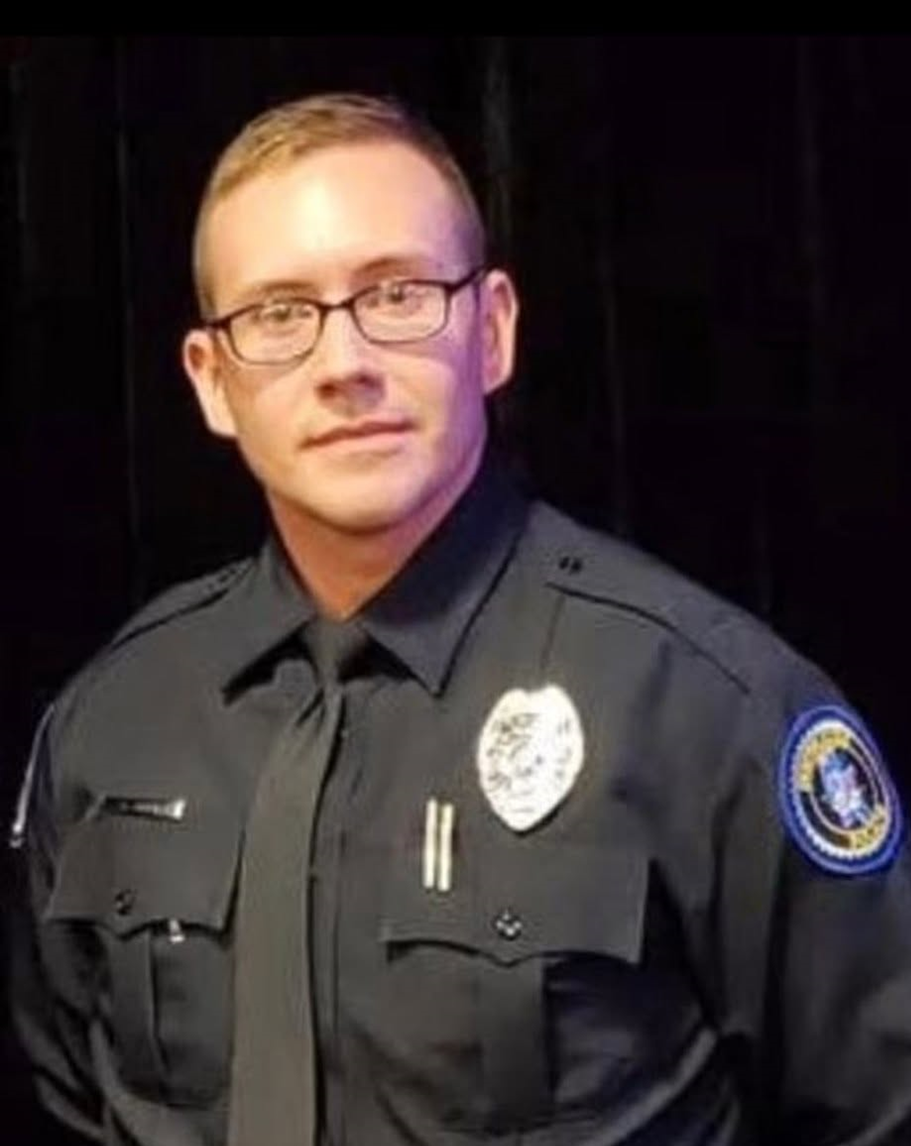
- Hunter Foster
-

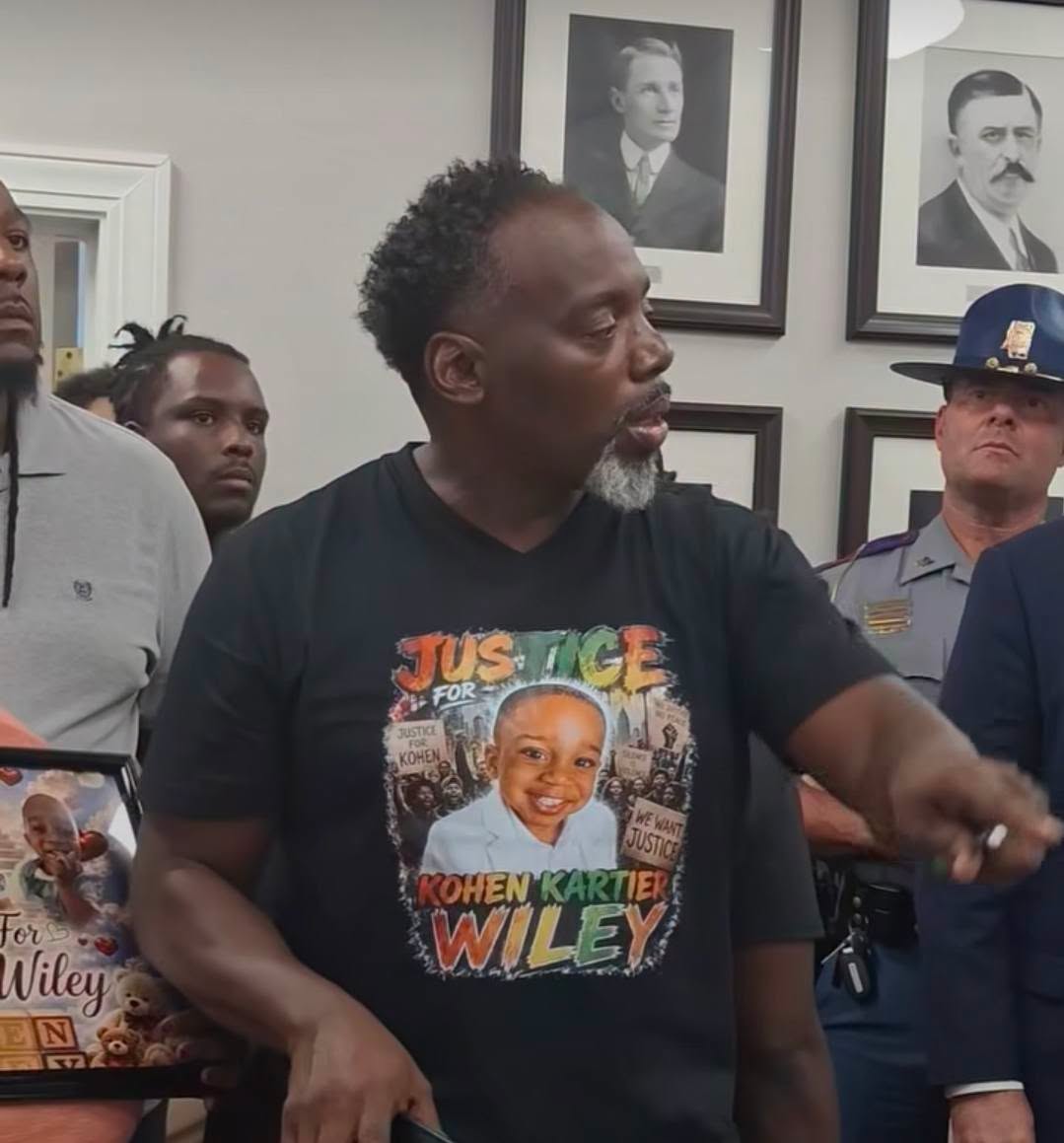
- Baby Kohen Wiley
This is where S.C.A.T. must help the public understand the simple logic:
If a city police officer uses deadly force, that may raise a Fourth Amendment question.
If city leaders fail to train, supervise, discipline, or properly vet officers, that may raise a civil-rights question.
If Black residents and racial minorities are treated differently, ignored, intimidated, or denied equal protection, that may raise a Fourteenth Amendment and federal discrimination question.
If an officer acts under the authority of law and deprives someone of federally protected rights, that may raise a federal “color of law” question.
If a police department shows a pattern or practice of conduct that violates people’s rights, that may call for federal review.
That is why this matter cannot be reduced to gossip, politics, or local personalities. This is about whether the government itself has respected the rights of the people.
The public concern surrounding Hunter Foster makes the question even more urgent. Public reporting has identified Foster as one of the officers present or involved in the police shooting that killed Baby Kohen. The community has also raised concerns about his prior law-enforcement history and whether city officials properly reviewed his background before allowing him to serve in Senatobia with a badge, a gun, and authority over the public.
-
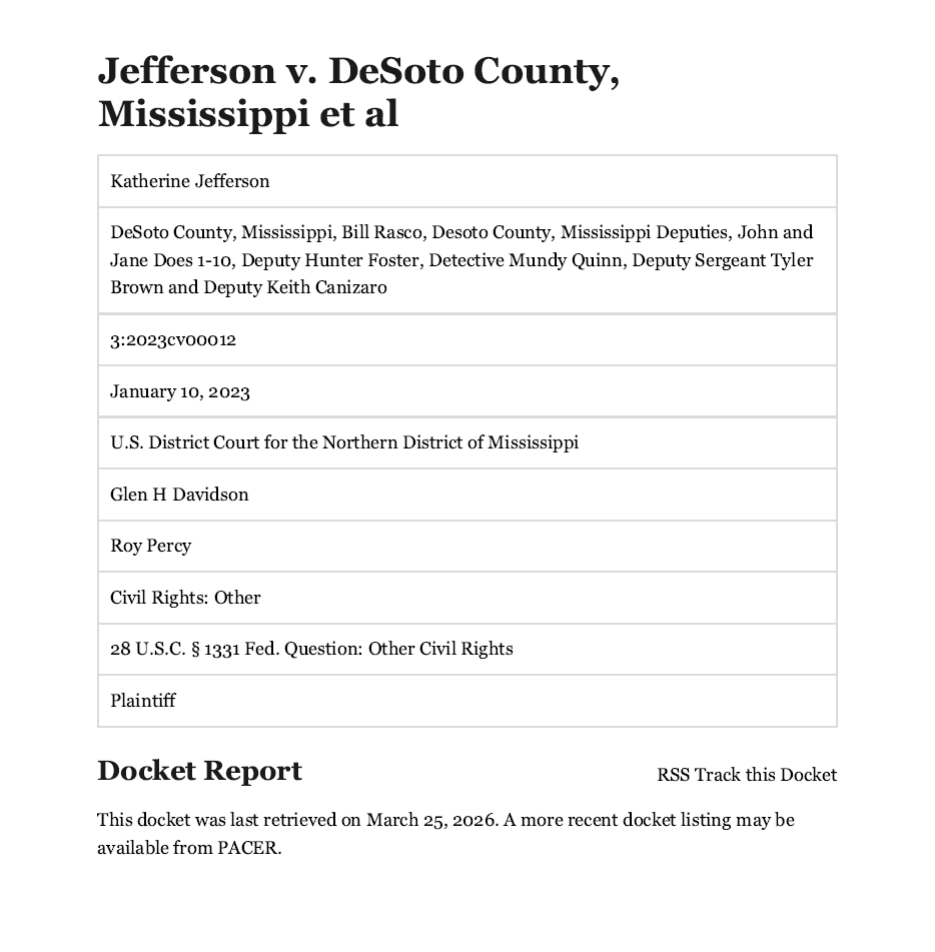
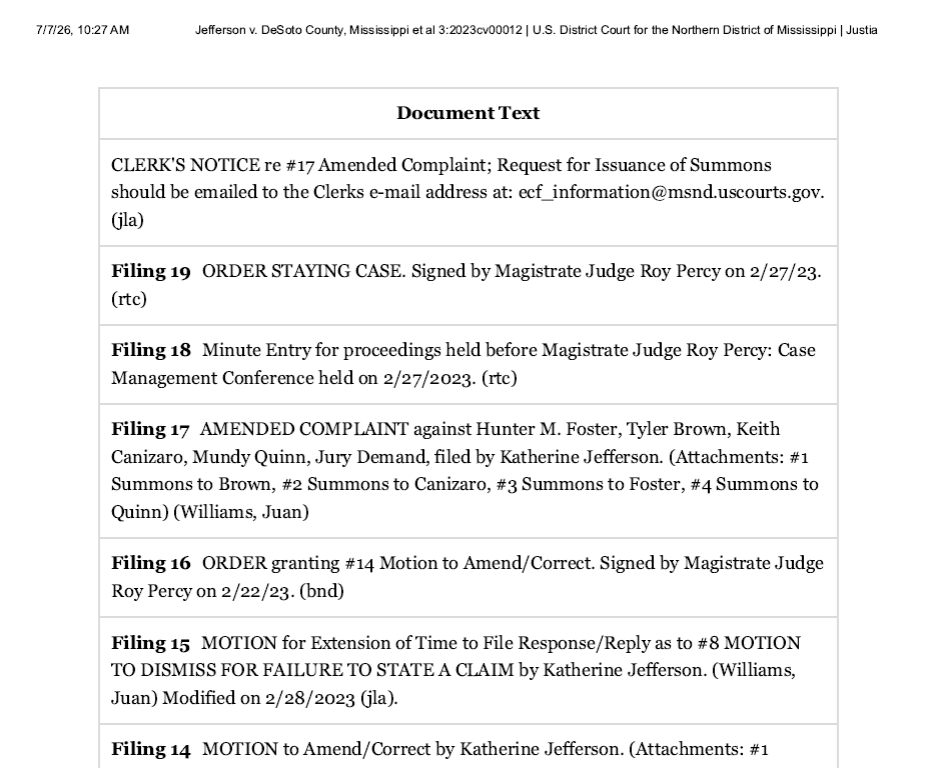
- Deputy Hunter Foster case while serving in Desoto County
The public record raises a deeper concern about Senatobia’s hiring practices. In the May 19, 2026 Board minutes, Alderman Garrett questioned whether background checks and drug screenings could be completed before the Board authorizes new hires. His question suggests that even city officials recognized a possible problem with approving employment first and waiting on screening results afterward. Mayor Graves and Alderman Underwood explained that such hires were “pending” background and screening results and that if something came back, the person would not go on payroll.
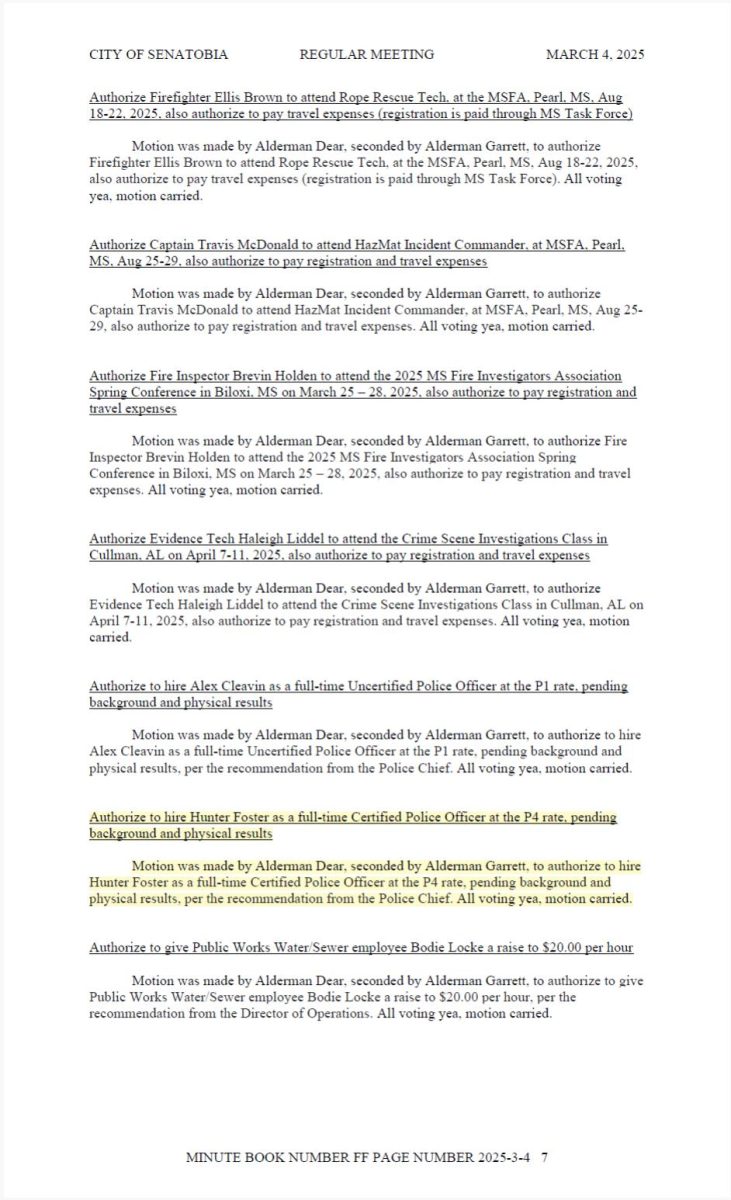
But that explanation now raises a serious public question in the case of Hunter Foster. The March 4, 2025 minutes show Foster was authorized to be hired as a full-time certified police officer at the P4 rate, pending background and physical results. The minutes do not show any public discussion of his prior law-enforcement history, prior civil-rights litigation, prior complaints, use-of-force concerns, disciplinary record, community advisory review, or constituent input before the Board voted.
That does not prove no background check was done. But it does prove the public record does not show what kind of background check was done, who reviewed it, what was found, whether prior civil-rights concerns were examined, or whether the Board was fully informed before authorizing him to carry a badge and weapon in Senatobia.
This is the simple question S.C.A.T. must ask:
Was Hunter Foster truly vetted before he was placed in a position of police authority, or was he moved through the same routine “pending background” process that Alderman Garrett later questioned in open meeting?
That question goes to the heart of accountability. If a city is hiring officers first and reviewing serious background concerns later, then the public has a right to know whether weak hiring practices contributed to the death of Baby Kohen Wiley.
The issue is not paperwork. The issue is life and death.
A baby is dead. A family is grieving. A city is divided. And the people have a right to know whether the person publicly connected to this fatal police shooting was properly screened, fully evaluated, and lawfully supervised before being given police power over the community.
This is why the Senatobia Committee for Accountability and Transparency — S.C.A.T. — must press for a federal review. The review should include the full hiring file, background check, employment history, prior complaints, prior civil-rights case information, training records, use-of-force history, disciplinary records, and all records showing what the City of Senatobia knew, when it knew it, and what it did before and after Hunter Foster was hired.
The question is no longer only who fired the fatal shot.
The question is also who opened the door.
Until all records and footage are released, the people must speak carefully. But careful speech does not mean silent speech. It means asking the right questions in a lawful and organized way.
Who hired him?
Who vetted him?
Who reviewed any prior lawsuits, complaints, disciplinary history, or use-of-force concerns?
Who recommended him?
Who voted?
Who stayed silent?
Who is responsible for making sure that officers moving from one police department to another are not simply passed along without public accountability?
Those are federal questions when the answers may reveal a failure that placed constitutional rights, civil rights, and human life at risk.
S.C.A.T. must therefore call on the U.S. Department of Justice, the FBI, and the U.S. Attorney’s Office to review not only the shooting of Baby Kohen Wiley, but also the broader system in Senatobia: police hiring, training, supervision, discipline, promotion, use of force, complaint handling, body-camera practices, public transparency, and the role of elected officials in approving or overlooking these matters.
This is not against lawful policing. It is against lawless power.
This is not against government. It is against government that refuses to answer the people.
This is not against every officer. It is against any system that protects the badge more than it protects the baby.
The old saying remains true: you cannot put the fox in charge of the hen house and then tell the chickens to trust the process.
Trust must be earned.
Transparency must be shown.
Accountability must be proven.
Justice must be more than a word spoken after funerals.
S.C.A.T. must become the organized voice that helps residents document complaints, preserve evidence, collect witness statements, request public records, educate families about federal complaint options, and demand that higher authority examine whether Senatobia has a pattern of unconstitutional policing or discriminatory treatment.
The committee should encourage every person who has experienced or witnessed police abuse, racial profiling, excessive force, threats, retaliation, false arrest, intimidation, mistreatment, or denial of rights to write down the facts: date, time, location, officer name if known, witnesses, injuries, photos, videos, reports, medical records, court papers, and prior complaints.
One story may be dismissed.
Many documented stories become a pattern.
And a pattern may become a federal issue.
That is the lesson Senatobia must learn now.
The death of Baby Kohen Wiley is not only a tragedy. It is a test. It is a test of whether the people will remain divided, afraid, and silent, or whether they will organize as one S.C.A.T. to demand truth, transparency, federal oversight, and justice.
It is time for the City of Senatobia to tear down the middle wall of partition that has prevented true healing. That wall of Black and White, silence and fear, power and pain, must come down. No city can heal while people in authority would rather stay wrong than do what is right. Senatobia must choose truth over pride, justice over politics, and transparency over the protection of a broken system. If the city will not shine the light on itself, then S.C.A.T. must call for the federal government to shine the light from above.
A baby’s life has been taken.
A family is grieving.
A community is questioning.
And the law must answer.
The federal question before Senatobia is simple:
Were the people’s constitutional and civil rights protected, or did the system fail them?
Until that question is answered fully, publicly, and honestly, S.C.A.T. must keep watch.
Baby Kohen’s life mattered.
The people’s trust matters.
The truth matters.
And justice, if it is to mean anything, must be seen, heard, proven, and applied equally to all.