The Southern Truth: Regina Wilson is On the Move Advocating and Fighting for the Black Press

Regina Wilson
By Gloria Zuurveen
Editor-in-Chief
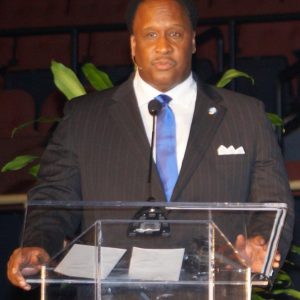
PACE NEWS, the Los Angeles Sentinel, Our Weekly, Inglewood Today, and many other Black media owners in Southern and Northern California have one thing in common: Regina Wilson, Executive Director of California Black Media (CBM). Wilson spends countless hours advocating for all of them, fighting for economic equity, the dissemination of information, and public notices coming out of the State Capital in Sacramento or wherever Black citizens’ tax dollars are being spent in California.
Wilson is a fierce advocate for keeping her finger on the pulse of public policies and their impact on the Black community in the State of California. She is passionate about ensuring that the Black press receives its fair share of advertising dollars and that appropriate public notice language is included in policy documents. She believes the public has a right to know how to access the millions, and in some cases, billions of dollars spent year after year in contracting and other proposed line items put forth through the California Legislature.
In a recent conversation about her extraordinary work on behalf of Black media owners and what motivates her, especially during challenging times like theses, Wilson said, “California Black Media exists because we believe the role of local community newspapers is an essential part of our democracy. Being declared in the Constitution as the Fourth Estate gives us hope that the founders of this country understood the importance of a free press. All throughout history, the free press has recorded daily and weekly historical events in local communities; however, it’s the Black press that offered a different narrative and insight that helped complete and tell a more accurate story relevant to the Black community.”
She continued, “I do what I do because the Black press has had such an influence on my life and experiences, which have shaped and made me who I am today. Having parents as publishers allowed me to see the world through a different lens. As a teenager, I remember going to media days at Disneyland, tagging along to community events like Magic Johnson’s Mid-Summer Night’s weekend, and even attending school board meetings. I witnessed countless people asking for news coverage on discrimination cases and excessive police use of force, like the Tyisha Miller shooting (an unarmed Black woman who was shot to death in her car in Riverside in the ’90s). Those experiences groomed me for the role I play today and fueled the passion I have for all publishers who do this work.”
“Our community was ignored for so long, so we created our own newspapers to plead our own cause. As a witness to these stories and more, I was encouraged by seeing how these stories helped the people in our community. I have made the commitment to ensure the legacy of Black locally-owned media not only survives but also thrives amidst the abundance of information,” Wilson said.
Again, in times like these, Wilson reminds me of the pioneering journalist Ida B. Wells, who recently received a posthumous special citation from the Pulitzer Prize Board “for her outstanding and courageous reporting on the horrific and vicious violence against African Americans during the era of lynching.” As Black media owners stand in the gap and call attention to economic injustice and other important issues like police brutality—today’s equivalent of lynching during Ida B. Wells’ day—Wilson is on guard, ready, willing, and able to dispatch a cadre of advocates and writers who contribute not only to the Black press bylines but also to the bottom line of Black press media owners.
In closing, Wilson said, “I believe quality information is as important as the water we drink and the air that we breathe. After all, Ida B. Wells said it best: ‘The people must know before they can act, and there is no educator like the press.’”