“I Wear a Proud D”: Protesting Partial Integration from Mississippi Segregation

The gymnasium built for the Black in Senatobia when we were segregated. Photo by Gloria Zuurveen
 The Southern Truth
By Gloria Zuurveen | PACE News
In Tate County, Mississippi—long before the word “integration” rolled off federal tongues with ease—we lived under the suffocating weight of Jim Crow. There was no pretending. No illusions. We knew who we were and exactly where we stood.
At Melvin Cathey School—the “colored school”—we may have lacked the comforts afforded white children, but we were blanketed in care. Our teachers nurtured us with love, discipline, culture, and pride. They gave us more than an education; they gave us values. Even with second-class resources, we received first-class preparation for life.
We walked to school every day, passing through white neighborhoods, while their children rode in cool, air-conditioned buses. We studied from discarded textbooks—hand-me-downs from white schools after they were deemed too worn for white hands. But none of that broke us. In fact, it built us.
Then came the federal mandate: Integrate or lose funding. And just like that, the strength and safety of our Black school community was torn apart. Ninety Black children—myself included—representing the three sixth-grade classes at Melvin Cathey, were uprooted and pushed into the white public school. In Senatobia, there was only one Black school and one white school. “Integration” became a one-way street. We were the only ones made to move.
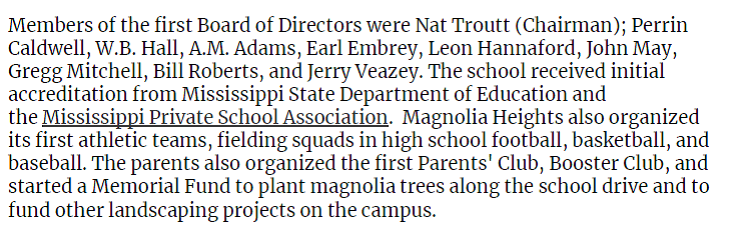
But not everyone complied. Some white students—like current Mississippi State Senator Trey Lamar—followed in the footsteps of their parents and avoided integration altogether. Just like their generation had done in the early 1970s, they left the public school system and enrolled in Magnolia Heights, a private, segregated academy established by those determined to preserve separation under the guise of “school choice.” Senator Lamar’s mother and grandfather, Leon Hannaford, were among those who helped organize the school. Their goal was simple: maintain the status quo, protect white dominance, and resist integration—not just in practice, but in spirit.

What’s remarkable—and deeply troubling—is that many of those same families are still in power in Senatobia today. The system hasn’t changed. The names haven’t changed. Only the language has.
The white school we were forced into never truly welcomed us. There was no orientation, no cultural exchange, no effort to understand or honor what we brought with us. We were expected to assimilate, not to belong. That’s not integration—that’s erasure.
This was America’s Southern truth: A federally mandated policy that may have changed the seating chart, but never changed the hearts.
Of the 90 Black children who entered the newly “integrated” school system, only 13 of us graduated. Let that sink in. Thirteen out of ninety. The others weren’t lost because they lacked intelligence. They were pushed out—by racial hostility, isolation, and systemic neglect. One by one.
Even within the so-called integration, we were still divided. Boys sent to one campus. Girls to another. True unity was denied. It was a lie dressed in legal language.
But we weren’t fooled.
We saw it.
We felt it.
And we did something about it.
From the heart of our community—New Ford Baptist Church on Hudson Street—we organized. With the help of our elders and the local NAACP, we strategized resistance. We were children, yes—but we were not blind to injustice.
One morning, after the school bell rang and the halls went quiet, we stood up.
Every Black child. From every classroom.
We walked out.
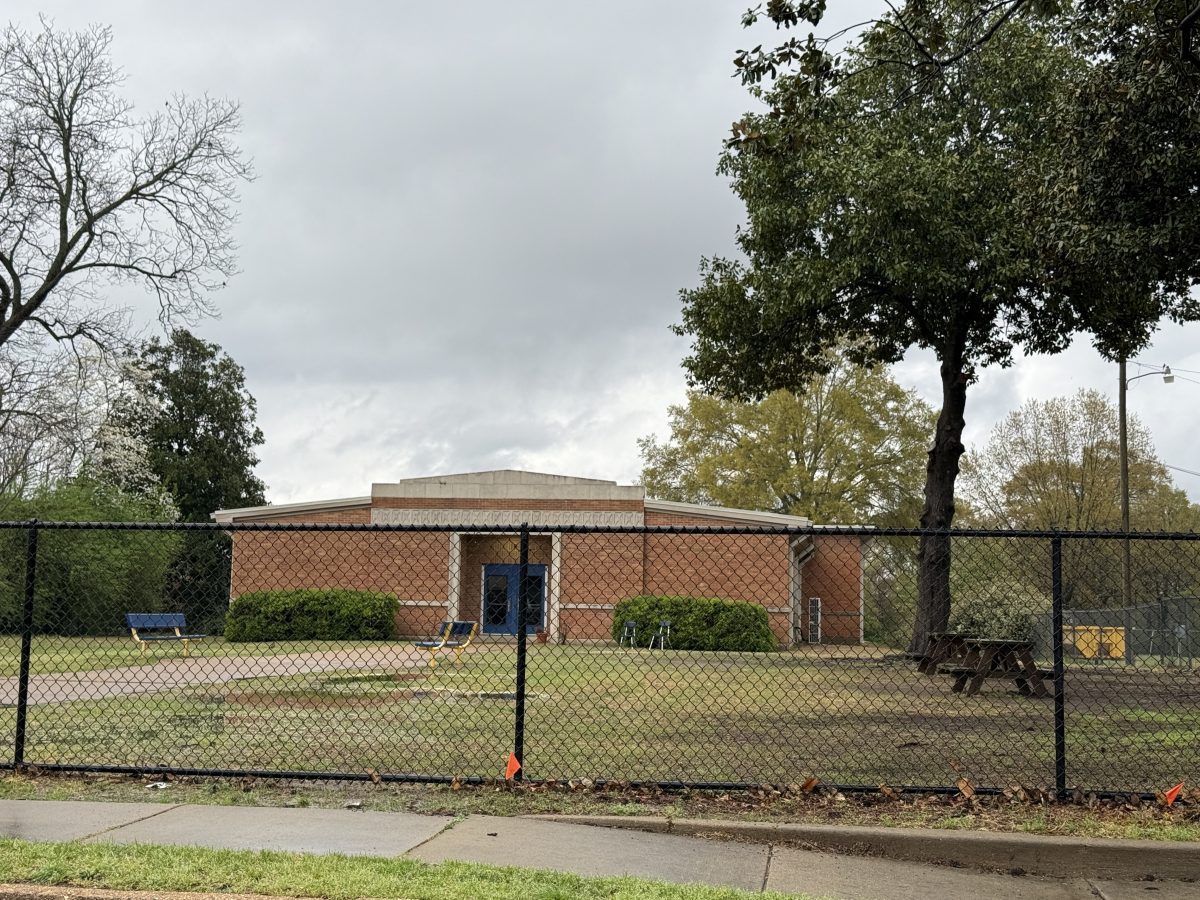
This is the integrated school we attended and those are the doors we walked out of to protest partial integration at Senatobia School in Senatobia, Mississippi. Photo by Gloria Zuurveen
We marched through those school doors and sang “We Shall Overcome.”
We weren’t just singing—we were protesting.
We weren’t just leaving—we were making history.
And it worked. The separation of boys and girls ended. Our voices forced a system to listen.
That semester, I received a “D” on my report card. But that letter stood for more than a grade.
It stood for Defiance.
It stood for Dignity.
It stood for “Don’t you dare forget what we did.”
I didn’t just wear a D—I wore it proudly during the harsh reality of Mississippi apartheid. It was never meant to be a symbol of honor, but I made it one.
That “D” was a mark on my report card, but not a mark on my heart.
Instead, it became a reminder—a call to fight for righteousness wherever I see injustice.
Because that moment wasn’t about me.
It was about we.
And still today, as school curriculums are whitewashed, as Black history is stripped from textbooks, and as policies are passed to silence our truth, I feel that same fire. The enemy may have changed its face, but the mission remains the same: suppress, divide, and erase.
But we remember.
We resist.
And we rise.
Let history record the truth:
It was the Black children who walked out.
Alone.
Unprotected.
Courageous beyond their years.
We didn’t just make history—we moved it.
So yes, I still wear my “D.”
And if standing for justice earns me another, then so be it.
Because I’d rather flunk a broken system than betray my people.
The Southern Truth