Empire, Oil, and the Hardening of a Nation’s Heart
 Editor’s Note | A New Year, A Kingdom Focus
By Dr. Gloria Zuurveen, Founder & Minister, BCOM
As we enter a new year, Branch of Christ Outreach Ministry (BCOM) recommits itself to the original mission of the Church: to rightly divide the Word of God and apply it to the world as it is, not as we wish it to be. The Bible is not a relic of the past; it is a living Word that speaks directly to the conditions, conflicts, and crises of our present time.
Too often, faith is separated from real life. Yet Scripture was written in moments of upheaval—during wars, empires, displacement, injustice, and moral collapse. God spoke then, and God is still speaking now. The Kingdom of God does not exist in isolation from global events, political power, or economic systems. It confronts them.
BCOM begins this year with a renewed commitment to Kingdom teaching—placing today’s headlines alongside biblical truth, not to promote fear or division, but to bring understanding, repentance, and alignment with God’s will. Jesus taught the people using the realities of their day—governments, taxes, oppression, wealth, and power—always pointing back to the heart of God and the responsibility of the people.
This message is presented not as political commentary, but as spiritual discernment. It calls believers to recognize patterns Scripture has already revealed, to examine the condition of the heart—both personal and collective—and to understand how God’s sovereignty operates in times of global shaking.
As we move forward in this new year, BCOM will continue to address relevant issues through a biblical lens, reminding the body of Christ that the Kingdom of God is active, authoritative, and present—even now.
“He that hath ears to hear, let him hear.”
— Branch of Christ Outreach Ministry
Empire, Oil, and the Hardening of a Nation’s Heart
By Gloria Zuurveen, Founder & Minister, Branch of Christ Outreach Ministry (BCOM)
“The love of money is the root of all evil.” (1 Timothy 6:10, KJV) That truth has never expired, yet it stands unmistakably on display in our time. When money, power, and empire replace righteousness, humility, and obedience, nations do not collapse overnight—they harden from within.
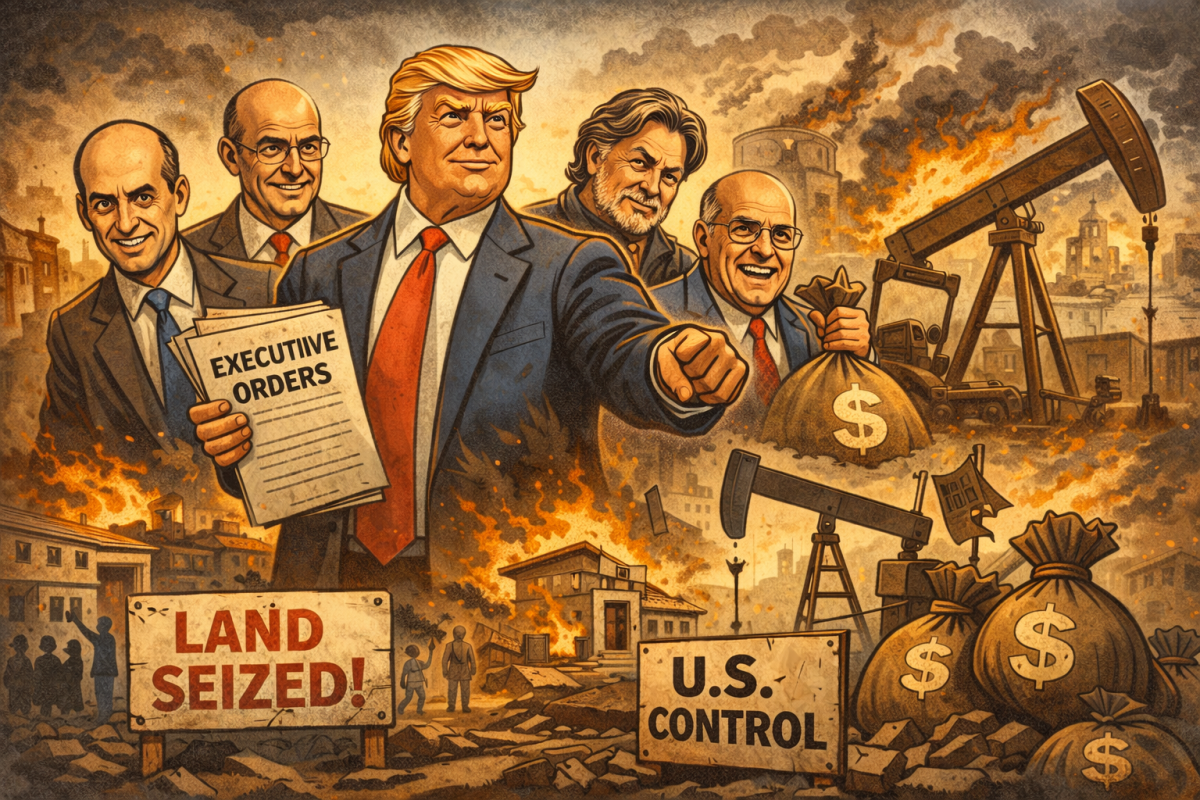
In the first days of 2026, the world watched in disbelief as an extraordinary U.S. military operation swept across Caracas, Venezuela, resulting in the capture and forcible removal of former President Nicolás Maduro and his wife. Transported to a Manhattan courtroom under long-standing indictments for narco-terrorism and cocaine trafficking, Maduro proclaimed his innocence and denounced the operation as kidnapping by U.S. forces. The action—unprecedented outside of a declared war—sparked international outrage, emergency United Nations sessions, and condemnation from global powers questioning both its legality and its motive.
At the same time, President Donald Trump issued pardons to high-profile figures convicted of drug crimes, including former Honduran President Juan Orlando Hernández, who had previously been sentenced to decades in U.S. prison for trafficking offenses. The contrast was striking: forceful punishment abroad paired with forgiveness at home.
This is not merely a policy contradiction. It is evidence of a nation wrestling with its own heart. (Jeremiah 17:9, KJV)
On one front, the administration declares a “war” on drug trafficking, deploying naval and air assets and branding foreign leaders as criminal kingpins. On another, it extends clemency through executive power. Together, these actions raise serious questions about justice, consistency, and moral authority. (Proverbs 21:15; Proverbs 20:8, KJV)
When Venezuela enters the picture, history demands clarity. Venezuela possesses some of the largest proven oil reserves in the world. For decades, U.S. involvement in the region has been deeply intertwined with energy interests. Current rhetoric surrounding “reconstruction” and future management of Venezuelan infrastructure invites skepticism, especially when viewed through the long record of empire, extraction, and dominance in the Western Hemisphere. (Habakkuk 2:12, KJV)
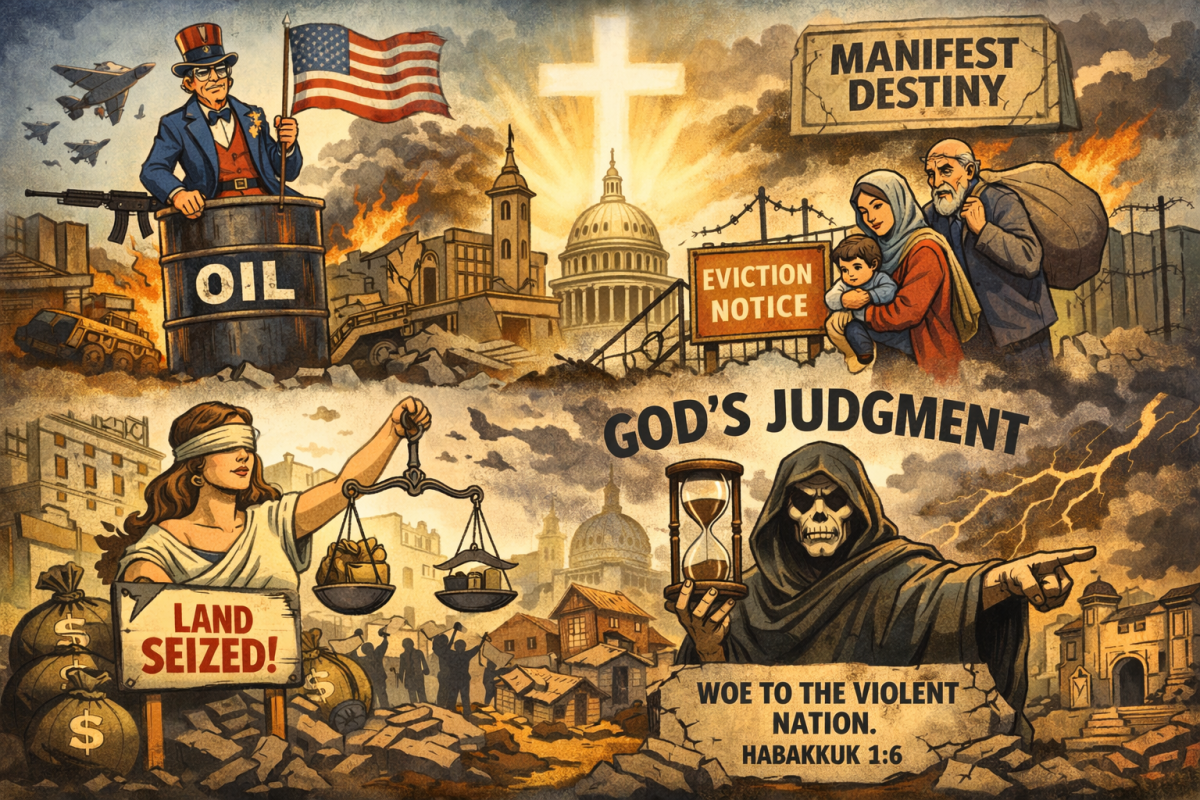
For communities in the American South—and for Black and marginalized communities nationwide—these patterns are not abstract. They echo earlier eras when force was justified as security, wealth was accumulated through displacement, and righteousness was invoked to excuse oppression. Andrew Jackson’s legacy reminds us that nations can convince themselves they are advancing freedom while practicing removal and exclusion. (Isaiah 10:1–2, KJV)
When Pharaoh refused to let God’s people go, the Lord raised up Moses and appointed Aaron as his interpreter. Aaron spoke on behalf of Moses, and Moses spoke on behalf of God. This confrontation was not political—it was spiritual. (Exodus 4:14–16, KJV)
And it was the people’s actions that caused God’s reaction.
As it is written, God hardened Pharaoh’s heart, “that he hearkened not unto them; as the Lord had said.” (Exodus 7:13, KJV; see also Exodus 9:12; 10:20; 14:8) This hardening was not accidental. It unfolded exactly as God declared. Pharaoh’s resistance fulfilled divine judgment, not human misunderstanding. (Romans 9:17–18, KJV)
The result was not immediate freedom.
The result was the wilderness.
Forty long years—not because God failed His people, but because disobedience delayed the promise. Rebellion prolonged the journey. The wilderness became both consequence and correction. (Numbers 14:33–34; Deuteronomy 8:2, KJV)
Today, as Epstein-related records remain delayed and heavily redacted despite transparency laws; as political power intersects with billion-dollar fusion-energy investments tied to media and family networks; as military force is exercised abroad while accountability bends at home—Americans are right to ask hard questions. (Luke 8:17; Ecclesiastes 12:14, KJV)
Who benefits?
Who pays the cost?
And what happens when a nation’s heart grows hard? (Proverbs 29:1, KJV)
President Trump is not the originator of this moment—he is an instrument within it. History shows us that when nations exalt wealth over righteousness and power over truth, God does not need to invent judgment. He allows people to walk fully into the consequences of their own choices. (Romans 1:24–25; Galatians 6:7, KJV)
Until the people look inward, repent, and reclaim their God-given authority in unity and obedience, the cycle will continue. (2 Chronicles 7:14, KJV) Without repentance, we risk returning to the familiar labor of empire—making bricks, learning the tricks of Egypt, and mistaking dominance for destiny. (Exodus 1:13–14; Psalm 106:13–15, KJV)
The truth—Southern, American, and global—does not live in conspiracy.
It lives in patterns. (Ecclesiastes 1:9, KJV)
And the pattern before us is the hardening of a nation’s heart. (Hebrews 3:12–13, KJV)
This is The Southern Truth.