Nithya Raman: Pawn or Player in the Elite Battle for Los Angeles?
 The Southern Truth
By Gloria Zuurveen, Editor-in-Chief
“Behold, I send you forth as sheep in the midst of wolves: be ye therefore wise as serpents, and harmless as doves.” — Matthew 10:16
At the 11th hour, Nithya Raman jumped into the race to be mayor of Los Angeles like a political thunderclap — not as an honorable mention, but as a calculated entry that has shaken City Hall, the political class, and anyone paying attention.
This was not a stumble. It was a step. Not a coincidence, but a choice.
Text chains across Los Angeles exploded with stunned variations of, “I didn’t see that coming!” That alone should give every Angeleno pause. Raman waited in the background, watched the landscape, and then, just before the deadline, eased in and beat the clock — quietly, cleanly, and with little warning.
She emerged like a figure out of nowhere — yet backed by forces that are anything but invisible.
What we are witnessing is not merely another election. This is a struggle over the direction, identity, and soul of Los Angeles.
And when we look east to New York — where a socialist mayor in Mamdani has recently taken office — we must ask a serious, sober question:
Are Los Angeles and New York being positioned as twin cities under the banner of Democratic Socialism?
This is not about fearmongering. This is about pattern recognition.
We are told that Raman’s campaign is backed by small-dollar donors, the tech industry, the entertainment industry, and the Democratic Socialists of America. On the surface, that sounds like a broad coalition. Beneath it, however, lies a deeper reality: Hollywood and Silicon Valley are not charity institutions — they are power centers with billions at stake in development, housing policy, policing, land use, and the future of this city.

Nithya Raman – LA CD4 (Photo: Nithya Raman website)
Los Angeles is not just any metropolis. It is the jewel of the West, the heart of global entertainment, a place where policy becomes precedent and money shapes neighborhoods. You do not make a last-minute entry into a race like this without serious backing and strategic calculation.
Yet beyond the dollars and endorsements lies a more sobering historical truth.
America has a long record of elevating “acceptable” figures when power needs a new face. In earlier eras, Black leadership — from Dr. Martin Luther King Jr. to other civil rights champions — was celebrated when their moral authority could be useful, but sidelined, surveilled, and ultimately pushed aside when their demands began to threaten entrenched interests. The rhetoric of partnership often gave way to the reality of political manipulation.
As the prophet Jeremiah reminds us, “The heart is deceitful above all things, and desperately wicked: who can know it?” (Jeremiah 17:9).
Power rarely repents — it simply changes its costume.
Seen through that lens, Raman can appear less like a random insurgent and more like a carefully positioned piece on an elite chessboard — not because she lacks sincerity, but because systems of power have a way of moving new faces into old roles to achieve familiar ends. The danger is not Raman herself; the concern is a recurring pattern in which Black communities are subtly shifted to the back of the political bus because a “new ilk” is deemed safer, more convenient, or more useful to carry someone else’s agenda.
History teaches that Pharaoh did not change his heart — he changed his strategy.
And this is where Los Angeles must wake up.
This is L.A. — a city of stardom, struggle, innovation, and inequality all at once. It is a place where the whole world is watching, and where decisions made here ripple far beyond our city limits.
Meanwhile, Mayor Karen Bass — rooted, seasoned, and deeply tied to the soil of Los Angeles — now faces a challenger she once stood beside. Bass was a key backer of Raman in 2024, lending her credibility, political capital, and public support when Raman’s district had been weakened by redistricting. Smiling mailers. Effusive quotes. A clear alliance.
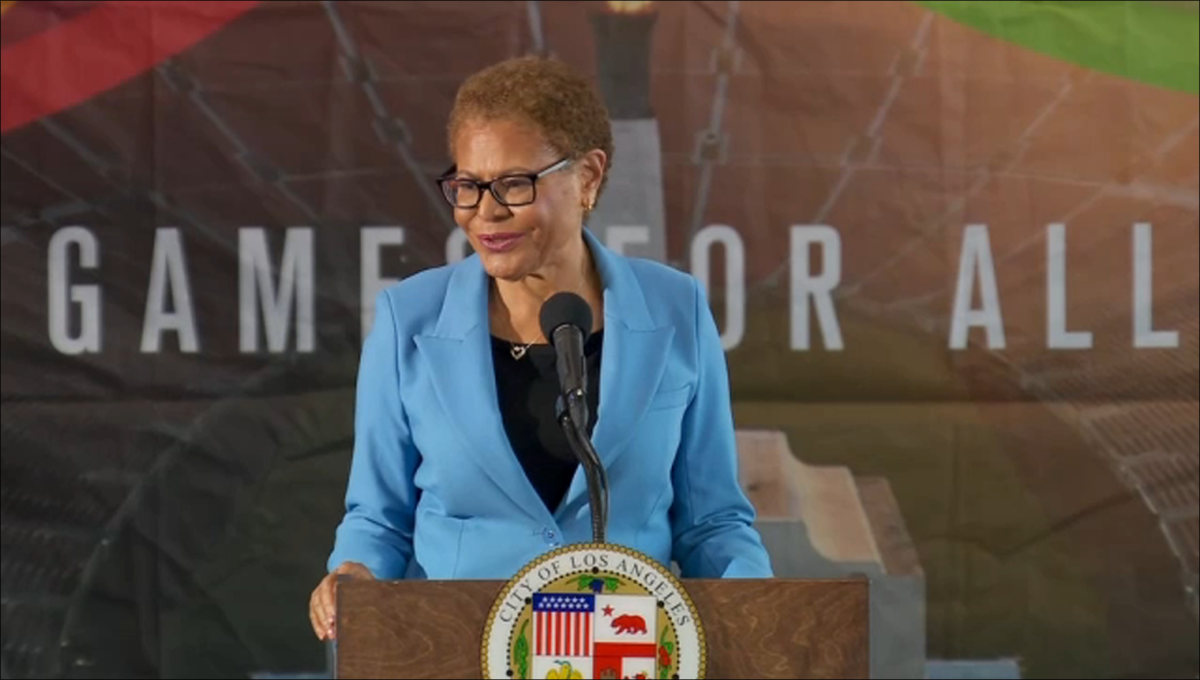
Los Angeles Mayor Karen Bass Photo credit: ABC7.com
Now that alliance has fractured.
Raman says Los Angeles needs “big changes.” Bass’s campaign fires back that Raman opposed cleaning up homeless encampments and efforts to make the city safer. The line has been drawn, and the battle lines are hardening.
But beneath the campaign attacks lies a larger question:
Who is truly steering this moment?
Is this primarily about Raman’s vision for Los Angeles? Or is it about powerful interests seeing an opening to reshape the city through a Democratic Socialist framework that may not align with the lived reality of working-class Angelenos — particularly Black Angelenos?
Because here is the Southern Truth that cannot be danced around:
If Karen Bass wants to win this election, she will need the Black community in a big, humongous, undeniable way.
That is not rhetoric. That is political arithmetic — and moral reality.
Time and again in Los Angeles, candidates ascend to power on the strength of Black voters, only to forget them once the victory is secured. Promises are made, photos are taken, and then priorities quietly shift.
The Southern Truth will not allow that pattern to go unchallenged.
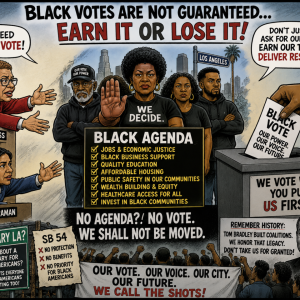
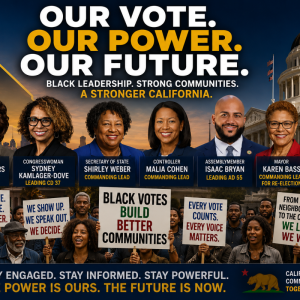
Black Angelenos must not be treated as pawns in someone else’s chess game — whether that game is being played by Democratic Socialists, tech billionaires, Hollywood elites, or even well-meaning progressives. They must be principals in their own political destiny.
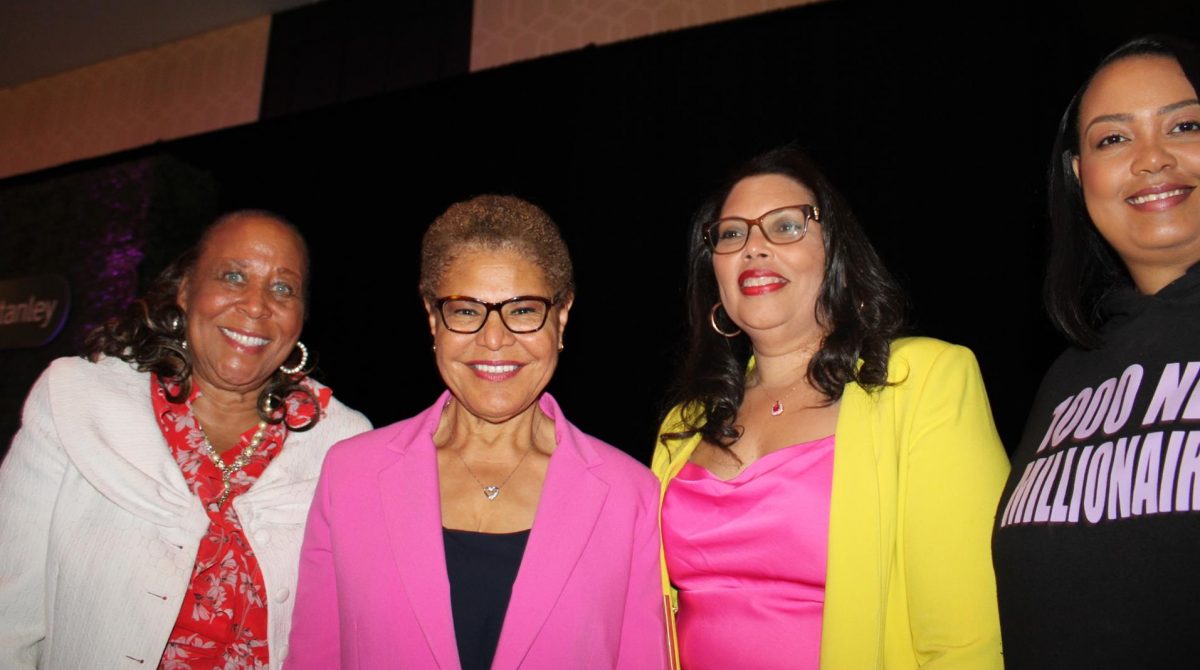
Lto R) Cynthia Mitchell-Heard, President and CEO, Los Angeles Urban League (LAUL), Los Angeles Mayor Karen Bass, Sarah Harris, CEO, BBA and Arlan Hamilton, Founder Backstage Capital & Runner, Author, Venture Catalyst during a BBA Salute to Black Women affair at the Sheraton Gateway Hotel in Los Angeles. Photo by Gloria Zuurveen
If Black voters are divided, discouraged, or taken for granted, the door swings wide for outside interests to shape Los Angeles without us, rather than with us. And that would alter this city in ways that may not be reversible.
As Scripture warns, “Except the Lord build the house, they labor in vain that build it.” (Psalm 127:1). No campaign, no billionaire donor, and no political ideology can truly govern Los Angeles without the moral, cultural, and civic foundation that Black Angelenos represent.
So the questions remain — and they must be asked plainly:
Who is backing Nithya Raman, really?
What commitments were made behind closed doors?
Who stands to benefit most if she wins?
And just as importantly:
Will Mayor Bass recognize — before it is too late — that her path to victory runs straight through a unified, respected, and empowered Black electorate?

Karen Bass, Los Angeles Mayor
Because this is not a minor election. This is a battle for the ages — for the future of Los Angeles, for the direction of our city, and for whether the least of these will continue to be left behind.
“For the Lord is a God of knowledge, and by him actions are weighed.” — 1 Samuel 2:3
The Southern Truth is watching.
And Los Angeles should be too.