The Southern Truth: Jamal Bryant Calls Off the Target Boycott—But Who Speaks for Black Economic Power?
 By Dr. Gloria Zuurveen
Publisher, PACE NEWS
When Rev. Jamal Bryant recently announced that the nationwide boycott of Target would come to an end, he explained that the corporation had addressed several demands raised by organizers. Target, according to the announcement, has nearly fulfilled a previously stated $2 billion commitment to invest in Black-owned businesses, completing approximately 97 percent of that pledge, with the remainder expected by Easter 2026. The company has also increased minority representation on its board and introduced internal initiatives aimed at diversity and belonging, along with $100 million in grants and scholarships for Black-led community organizations.

Jamal Bryant Photo courtesy Jamal Bryant Facebook page.
On paper, those commitments appear significant. Corporate America rarely moves without pressure, and when consumer movements organize themselves around economic leverage, companies tend to respond. Yet the reaction among many Black consumers suggests that something deeper is at stake than a corporate pledge.
Within hours of the announcement, social media filled with questions from ordinary people: Who authorized this decision? Who speaks for millions of Black consumers? And how does one individual end a movement that so many others helped sustain?
Those questions point to a larger issue that sits quietly beneath the surface of this moment: the question of economic independence.
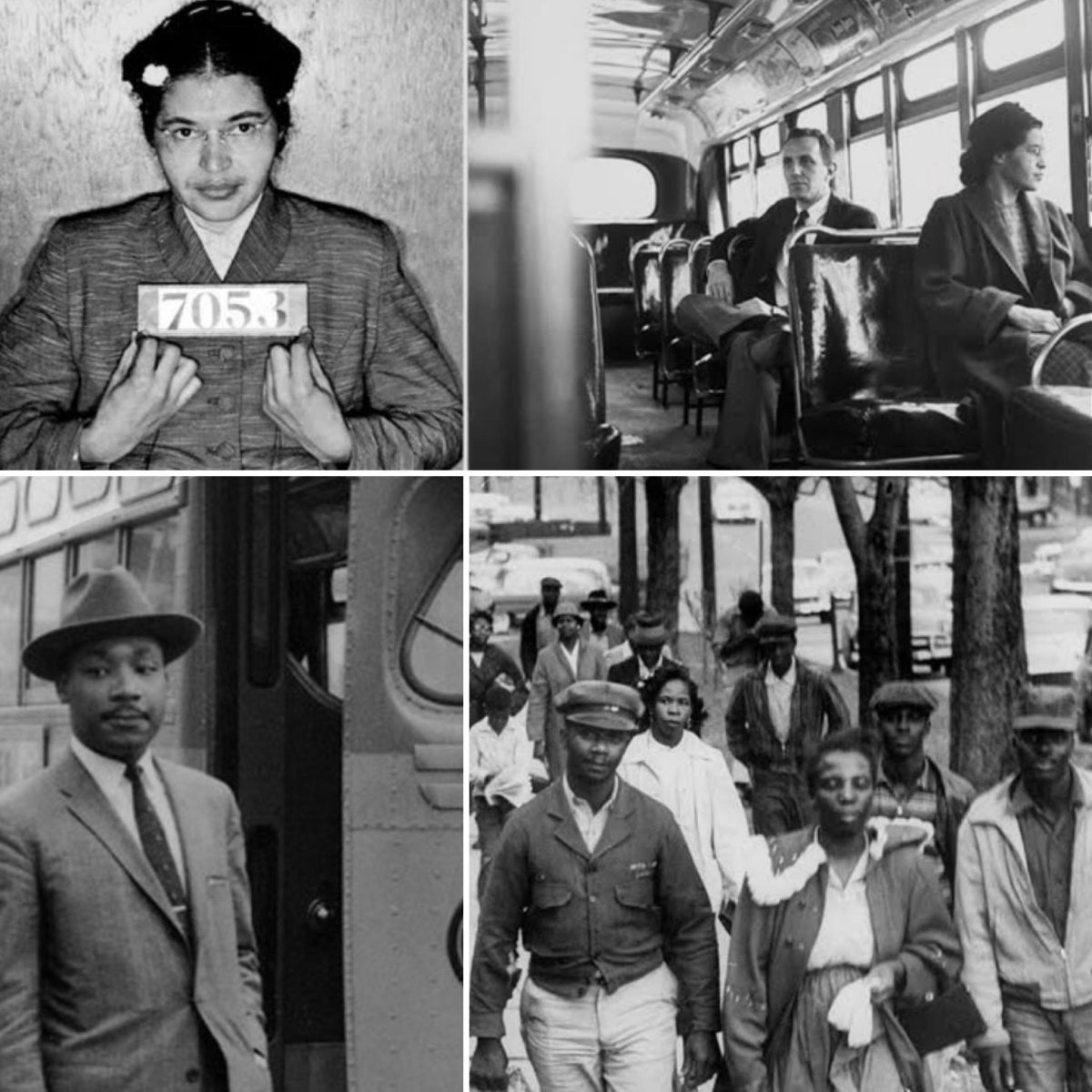
Boycotts in Black America have never been symbolic gestures. They have historically been acts of economic discipline. The Montgomery Bus Boycott demonstrated how unified spending decisions could cripple a system that depended on Black consumers. Tens of thousands of riders withdrew their fares and walked for over a year, proving that economic pressure could alter public policy and corporate behavior alike. But history also leaves us with an uncomfortable reflection. The ultimate goal of that movement was integration rather than ownership. While integration produced an important legal victory, the deeper economic opportunity demonstrated by that boycott—control over the economic system itself—remained largely unexplored.
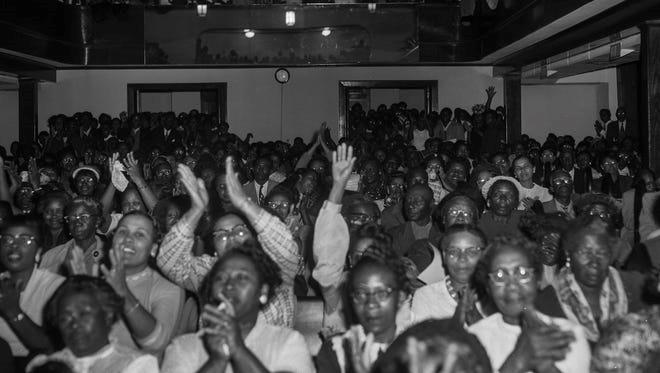
Historic photos of mass meetings at Holt Street Baptist Church during the Montgomery Bus Boycott. (Advertiser Files)
That tension between access and ownership has followed Black America for generations.
Long before Tulsa’s Greenwood District became known as Black Wall Street, another example of Black economic power was taking shape in Memphis, Tennessee. There, a formerly enslaved man named Robert Reed Church Sr. quietly built one of the most powerful Black business empires in the American South.
After the Civil War, Church began purchasing property in and around Beale Street in Memphis. At the time, much of the land had been devastated by yellow fever epidemics and economic collapse. Where others saw decline, Church saw opportunity. Over time, he acquired significant real estate holdings that helped transform Beale Street into one of the most vibrant centers of Black commerce and culture in the United States.
But Robert Church’s influence extended beyond business.
He understood that economic independence required something more than property ownership. It required institutions—places where a community could gather, organize, and communicate with itself. In 1899 he financed the construction of Church Park and Auditorium, one of the largest public gathering spaces available to Black Americans in the South at a time when segregation denied access to most civic venues. Those spaces did more than host concerts and meetings. They became platforms for political organizing, civic leadership, and something else that would prove essential to Black progress: the Black press.
Throughout the late nineteenth and early twentieth centuries, Memphis became a center for Black journalism. Newspapers such as the Memphis Free Speech, published by Ida B. Wells, used the power of the press to expose lynching and racial violence at a time when mainstream newspapers often ignored those realities. The Black press became the voice of communities that otherwise had none.
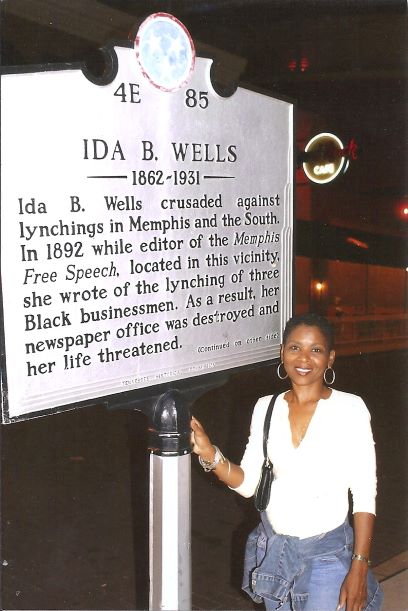
Dr. Gloria Zuurveen stands at the historic site in Memphis, Tennessee, where renowned crusading journalist Ida B. Wells began her fight against lynching after three of her friends were murdered for successfully competing with a white-owned business. Photo by Vedia Brunt
Economic independence and media independence were never separate ideas. They were two sides of the same struggle.
Without economic stability, the Black press could not survive. Without the Black press, communities had no platform to expose injustice or organize collective action.
That relationship still exists today.
As a publisher of a Black newspaper, I understand that connection intimately. The Black press has always served as both witness and conscience. It records the history others overlook, and it asks questions others sometimes avoid.
Which brings us back to the present moment.
The debate surrounding the Target boycott is not simply about one corporation or one pastor. It is about a much larger issue that has shaped the trajectory of Black America for generations: the tension between negotiating access to existing systems and building independent systems of our own.
History shows that Black communities have repeatedly built thriving centers of economic power. Tulsa’s Greenwood District did it. Rosewood, Florida, did it. Mound Bayou, Mississippi—founded by formerly enslaved people—demonstrated that Black self-governance and economic independence could flourish even in the Deep South. Memphis, under the economic leadership of Robert Church, showed it as well.
Yet history also shows that when Black prosperity grows strong enough to challenge the established order, resistance often follows. Some communities were destroyed through violence. Others were dismantled through policy, economic pressure, or systematic neglect.
These realities left scars that still shape how economic decisions are made today.
Historian Carter G. Woodson warned about this psychological dimension decades ago. In his book The Mis-Education of the Negro, he used a profound analogy to illustrate how deeply oppression can shape the thinking of a people. Woodson described a mentality in which the enslaved person had become so psychologically attached to the condition of the master that even when the master was ill, the response would be, “We sick, massa.” The statement reflected a tragic level of identification with a system that denied one’s own freedom.
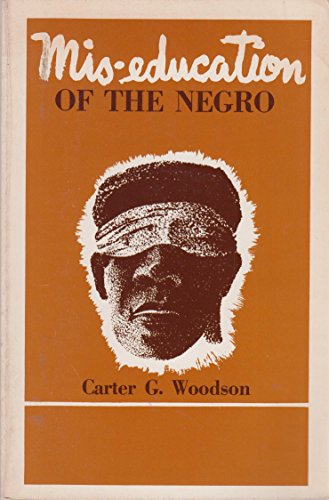
The Mis-Education of the Negro (1933) by Carter G. Woodson is a foundational text of Black social criticism arguing that American education systematically indoctrinated Black people into accepting inferiority and dependence. Woodson argues schools distorted history to undermine Black empowerment, demanding instead a curriculum focused on self-reliance and true African-American history.
Woodson argued that oppression does not operate through force alone. Over time it can condition a people to accept limitations placed upon them. When communities begin to settle for partial victories rather than structural transformation, they risk internalizing the very barriers they once struggled to remove.
Even Martin Luther King Jr., in the final years of his life, began shifting his focus toward economic justice. His Poor People’s Campaign reflected a growing recognition that legal rights without economic power would leave the Black community permanently dependent on systems it did not control. The next phase of the struggle, King suggested, was not simply about sitting at the same table. It was about determining who owned the table.
For me, this reflection is not an accusation. It is a realization. I write these words as a senior Black woman who came up from the thickets of Mississippi and lived through the long shadow of segregation and the complicated promises that followed. When you have lived long enough to see generations wrestle with the same questions of power, access, and economic independence, patterns begin to reveal themselves.
Today the Black consumer economy in the United States represents well over a trillion dollars in purchasing power. Corporations study it, market to it, and depend upon it. Yet the question remains whether that economic power will ever move with the same unity that earlier generations demonstrated when they walked miles rather than surrender their dignity.
There is also a moral dimension that America has never fully confronted. Throughout Scripture the command appears again and again: fear not. Yet fear often lives where repentance has not taken place. A nation that has not fully reckoned with its past carries a quiet anxiety about the future.
The Bible itself reflects this tension. In the Old Testament we see the consequences of injustice unfold repeatedly—kingdoms rising and falling under the weight of wrongdoing. The prophet Habakkuk cried out as he witnessed violence carried out by the Chaldeans and questioned how long injustice would prevail. Even the story involving King David and the foolish husband of Abigail shows how easily human anger can lead to retaliation.
Yet the New Testament offers a different resolution to the cycle of vengeance. When the crowd demanded the release of Barabbas and the crucifixion of Jesus Christ, the story revealed something profound: the guilty man walked free while the innocent one bore the punishment. In Christian belief, the cross became the place where retaliation was replaced by redemption—where someone paid the price for another.
The message of Scripture ultimately points toward repentance, justice, and restoration.
Until a society fully confronts its past, fear remains where reconciliation should be.
The Southern Truth is that the power has never disappeared. It still rests in the hands of the consumer.
And if history teaches us anything, it is this: a people who remember their economic power cannot be ignored—but a people who forget it will forever be invited to someone else’s table instead of owning their own.
Related Posts