Judge Joe Brown: Just Having My Say About the NAACP Image Awards

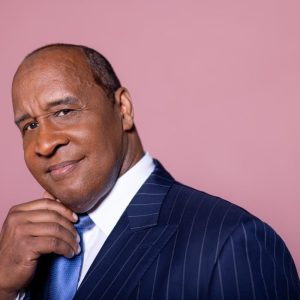
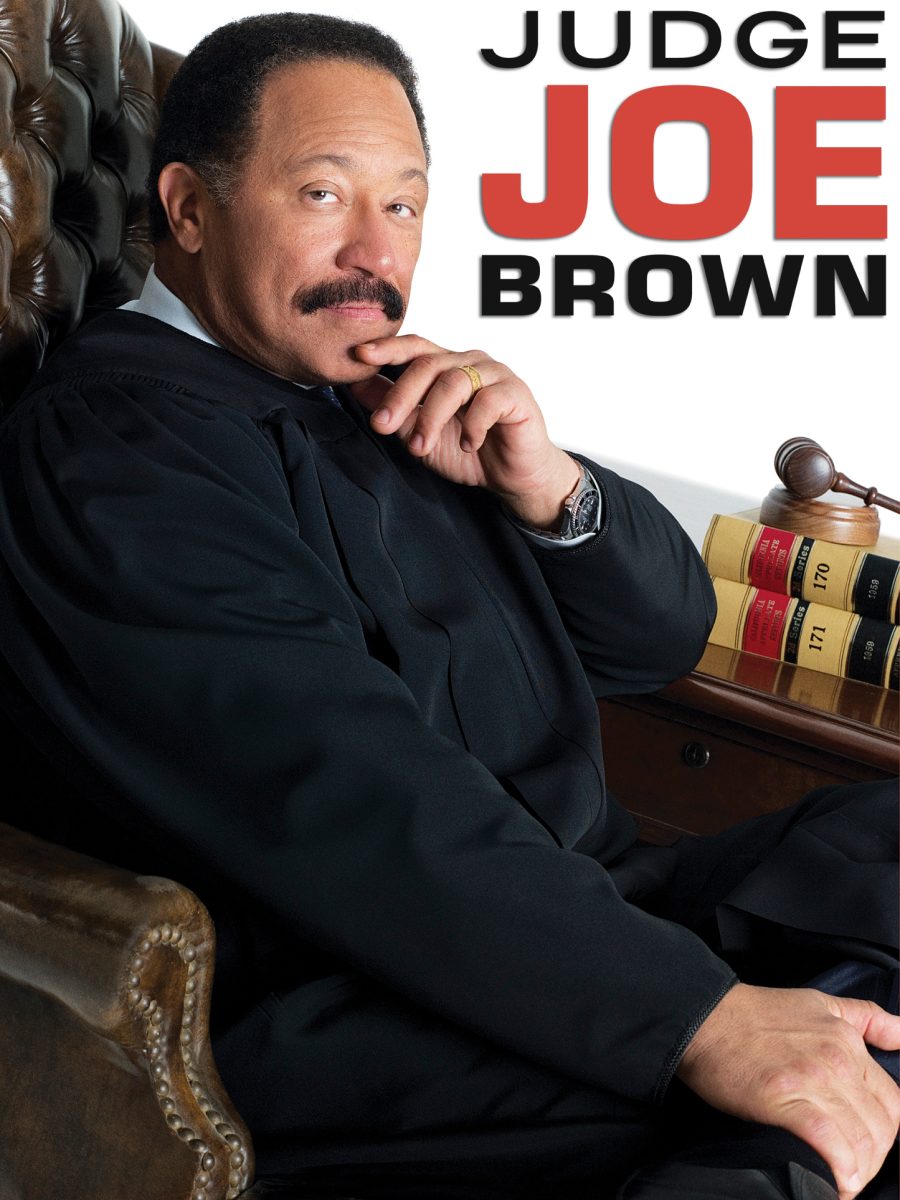
Former Memphis Mayoral Contender Joe Brown at his campaign headquarters in the Southland Mall in Whitehaven (Bill Dries/The Daily Memphian)
 By Judge Joe Brown, PACE NEWS Columnist
How many people know that the NAACP and the NAACP Image Awards are affiliated but not the same? That’s right—they are affiliated, but they are two entirely separate corporate entities. The Image Awards were meant to represent excellence in improving the self-image of Black Americans, who were once referred to as Negroes and, before that, as Colored.
Upon further research, I discovered that the NAACP does not actually control the Image Awards. Instead, for each category of award, there are hundreds of judges. Half of them are supposed to be from the entertainment industry, but they do not necessarily have to be NAACP members. The other half are supposed to be active members of the NAACP. However, due to the vested commercial interests tied to an elaborate affair like the televised Image Awards, the industry portion tends to be more consistently represented and often makes up the active majority when it comes to selecting and voting on award winners. This often skews the process in favor of the entertainment industry, which tends to glorify dysfunction in Black communities to maximize profits.
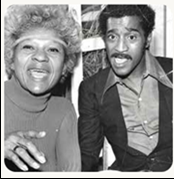
Ms. Maggie Hathaway and Sammy Davis, Jr.
Dr. Gloria Zuurveen, Founder and Publisher of PACE NEWS, Inc., a media company since 1995, shared a profound observation with me: “Ms. Maggie Hathaway would be turning over in her grave if she were here to see what they are showing for an Image Award.” Ms. Hathaway was the President of the Beverly Hills/Hollywood Chapter and produced the first Beverly Hills NAACP Image Awards. In 1967, along with Sammy Davis Jr., Hathaway helped create the NAACP Image Award show to honor Black performers who were overlooked by mainstream award shows, such as the Oscars and Grammys. But instead of honoring the legacy of pioneers like Hathaway—who sought to counter and offset the dysfunctionality in Black representation—today’s NAACP Image Awards seem to reinforce these very dysfunctions.
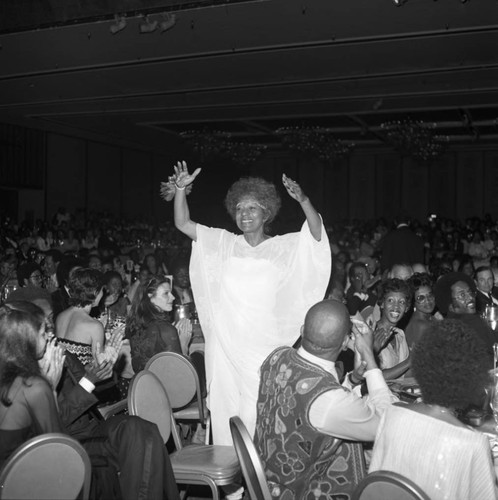
Maggie Hathaway standing among a seated crowd during the NAACP Image Awards, Los Angeles, 1978. Maggie Hathaway stands while others applause during the 11th Annual NAACP Image Awards at the Century Plaza Hotel in Los Angeles. Ms. Hathaway co-founded the Image Awards in 1967, and was a community activist, singer, and actress. She was also a golfer and wrote a column on the topic for the California Eagle and Los Angeles Sentinel.
It’s clear that the NAACP Image Awards have been relegated to nothing more than a massive entertainment venture driven by commercial pressures. What was once meant to honor the dignity and value of Black Americans has now become a platform that celebrates debauchery and buffoonery. This is far from what Ms. Hathaway and the original founders envisioned.
The NAACP Image Awards were never meant to be one of the most salacious and unprincipled productions, rewarding projects based on their commercial worth rather than their value in enhancing Black Americans’ image. Historically, the NAACP’s mission has been rooted in advancing the well-being of Black people. In the early 20th century, when there were few protections for Black Americans, the NAACP sought to elevate the lives of Black people by applying principles that would protect all people from injustice. It’s troubling that today we see a stark contrast between the NAACP’s original mission and the reality of the Image Awards.
Over time, the entertainment industry has grown to see Black Americans as a viable market for commercial enterprise, not only to push profit but to perpetuate a negative agenda, particularly in entertainment. Unfortunately, this has led to the glorification of dysfunction—a formula that, as Dr. Zuurveen said, would make Ms. Hathaway “roll over in her grave.” What’s disturbing is that there’s an entire industry invested in this portrayal, profiting off the dysfunction it perpetuates. The irony is that, while this generates revenue, it continues to disenfranchise Black Americans.
There’s also a close connection between the NAACP, the entertainment industry, and the Jewish community, which has led to mutually beneficial outcomes for all parties involved—except us, Black people. Yet, the reality is that these outcomes have only worsened the dysfunction, as Black Americans have become overly reliant on Diversity, Equity, and Inclusion (DEI) and a sense of entitlement, instead of effective leadership and true empowerment. This dysfunction, ironically, has become a hindrance to our potential redemption. Mechanisms that could be engines of our advancement have instead become obstacles to our progress.
One solution is clear: refuse to patronize the Image Awards until they are redeemed. Only then can the NAACP Image Awards return to their original purpose and restore the dignity that Ms. Hathaway and others worked so hard to establish.