Walking the Footsteps of the Ancestors: A 74-Year-Old Scholar Returns Home with Family to Complete a Journey 250 Years in the Making
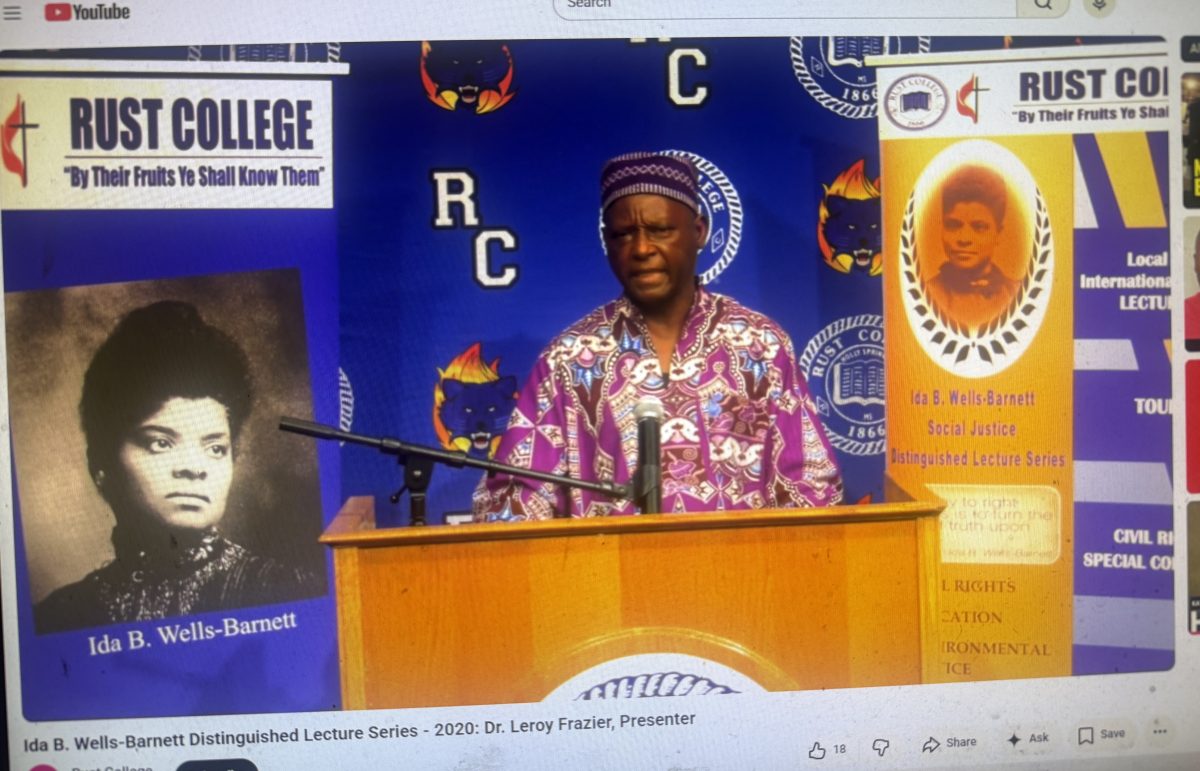
Dr. Leroy Frazier presenting at Rust College in 2020. Photo captured by Gloria Zuurveen
 By Dr. Gloria Zuurveen
The Southern Truth / PACE NEWS
There are some stories that are not just written for the newspaper. They are written into the soil. They are carried in the bloodline. They are whispered through the Black church, remembered in family names, and found again when somebody has the courage to go searching for what slavery tried to erase.
That is what comes to my spirit when I think about Dr. Leroy Frazier returning to Senatobia, Mississippi, with his family to walk the footsteps of the ancestors.
As one who comes from the Berkley — also remembered by some as Burkley — clan with roots reaching back into the early 1800s in Tate County, Mississippi, I know that Senatobia is more than a small town. It is a place of memory. It is a place where Black families worked, prayed, built churches, buried their loved ones, raised their children, and passed down the strength to keep going when the world gave them little room to breathe.
In times like these, we need history. Not just history from books alone, but history from the land, from the church, from the elders, from the family tree, and from those who refused to let our people’s names disappear.
On Saturday, June 27, 2026, Dr. Leroy Frazier, a retired university professor, former college president, author, scholar, and family historian, will return to Senatobia with family members to lead a historic ancestral pilgrimage through Tate County. This journey, more than 250 years in the making, traces a path that began in West Africa and now returns to the soil where generations of families planted faith, labor, leadership, and legacy.
Dr. Frazier has spent decades researching the Frazier, Davis, Reed, Brown, Wilson, Puryear, and related families whose roots run deep in Tate County. His research did not stop at the courthouse or the cemetery. It carried him across the Atlantic to Ghana, Nigeria, Senegal, The Gambia, and Guinea-Bissau, where he stood in places connected to the forced migration of African people whose descendants would one day help build communities like Senatobia.
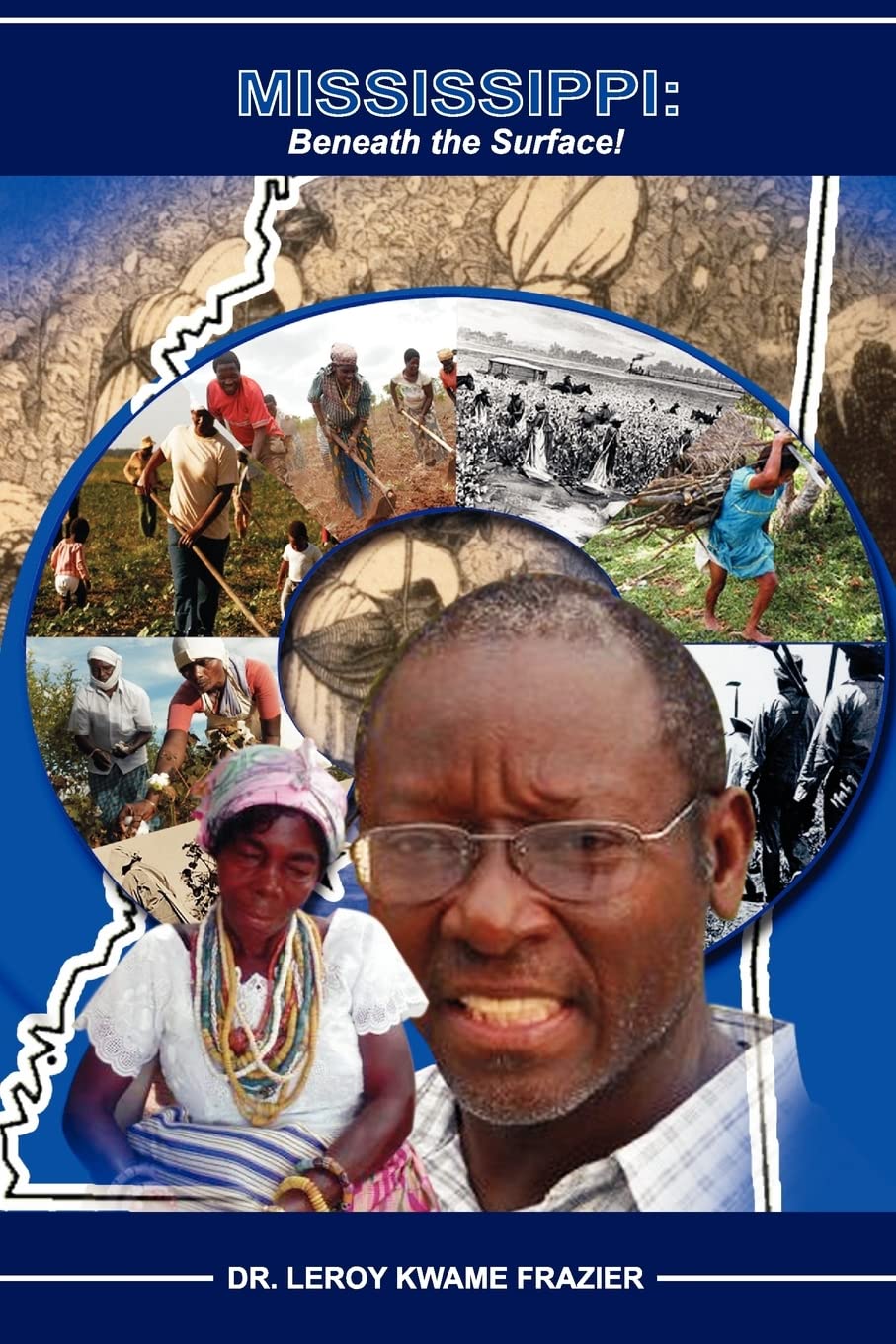
Now the journey comes home.
The ancestral pilgrimage will include visits to places that shaped the lives and faith of generations, including Macedonia Church, Gravel Springs Church, Yellow Dog Road, Bethel Church, and Callicott Road. These are not just locations on a map. They are witnesses. They are places where prayers went up, where sorrow was carried, where families gathered, where funerals were preached, where babies were blessed, and where the Black community found its footing when America did not always treat Black life as sacred.
That is why this journey matters.
Dr. Frazier said, “This is more than genealogy. It is about honoring sacrifice, preserving history, and helping future generations understand where they came from and where they are going.”
Those words should speak to every family with roots in Tate County. Because when you know where you come from, you can better understand where you belong. And when you know where you belong, you can stand with dignity even in a world that tries to shake your foundation.
The pilgrimage will also feature a Birthday Celebration of the Ancestors and a Youth Summit, where young people will hear family stories come to life and discuss how they will preserve the legacy for future generations. That, to me, is one of the most powerful parts of this journey. It is not enough for the elders to know. It is not enough for the scholars to write. The children must hear it. The youth must receive it. The next generation must understand that they are not beginning from nothing. They are heirs to faith, courage, sacrifice, intelligence, survival, purpose, and the land.
At the conclusion of the pilgrimage, senior family members will symbolically pass the torch to the next generation, challenging them to preserve family stories, honor the struggles of their ancestors, and continue the journey with pride.
Dr. Frazier said, “This is not the end of a story. It is the beginning of a new chapter.”
That is the Southern Truth.
As I reflect on my own family connection to Tate County through the Berkley/Burkley line, I understand how important it is for families to return, remember, and reclaim. Our ancestors may not have had streets named after them. Their stories may not have always been placed in official history books. But they were there. They built. They served. They worshiped. They farmed. They organized. They endured. And through them, we are still here.
Senatobia’s roots cannot be fully told without the Black church. From Macedonia to Gravel Springs to Bethel — and for me, New Salem and beyond — the church was more than a Sunday gathering place. It was a school of survival. It was a center of leadership. It was where announcements were made, where justice was discussed, where families were united, and where hope was renewed. Before there were platforms, there were pulpits. Before there were microphones, there were testimonies. Before there were formal records, there were elders who remembered.
That is why the Senatobia genealogical platform is such an amazing place to begin. It gives families a way to find out where we have been, who we belong to, and how our histories connect. It also gives us a way to move forward with truth, because people who know their history are harder to mislead, harder to erase, and harder to divide.
This pilgrimage is a factual and credible story of ancestral return. It is also a reminder that African American history is not only national history. It is local history. It lives on roads like Yellow Dog Road. It lives near churches like Macedonia, Gravel Springs, and Bethel. It lives in surnames like Frazier, Davis, Reed, Brown, Wilson, Puryear, Berkley, Burkley, and many others whose families helped make Tate County what it is.
And now, with all of his research, travel, scholarship, and writing, Dr. Frazier is being brought by the spirit back to the beginning — back to Senatobia, back to Tate County, back to the place where history must be remembered and the ancestors must be honored.
Media will have an opportunity to interview Dr. Leroy Frazier and family members, cover the ancestral pilgrimage, hear Youth Summit discussions, learn from genealogy presentations, and capture reflections on local African American history.
The event will take place Saturday, June 27, 2026, in Senatobia, Mississippi.
For more information, contact Dr. Leroy Frazier, Family Historian, Author, and Community Leader, at [email protected] or 678-651-3059.
A journey that began in West Africa more than two centuries ago continues in Tate County — where history is remembered, ancestors are honored, and a new generation receives the torch.
And for those of us whose roots still call us back home, this is more than a pilgrimage.
It is a sacred reminder that we belong to a people who survived, a people who remembered, and a people whose story is still being written.